

A deacon stole is much more than a simple piece of fabric—it's a powerful visual symbol of service and ministry within the church. Worn diagonally across the body, it immediately tells everyone a deacon's unique role. Think of it as a specialist's uniform, instantly communicating their function and commitment to the community.
What a Deacon Stole Represents in the Church
Most of us have seen academic stoles worn at graduation, which represent years of hard work and scholastic achievement. A deacon's stole works in a similar way, but on a much deeper, spiritual level. Instead of marking a completed course of study, it signifies a sacred vow of service—a lifelong commitment to God and the congregation. It is the main visual marker of ordination into the diaconate.
This sacred vestment is often called the 'yoke of service,' pulling from biblical imagery where a yoke represents a burden carried in Christ's name. When a deacon puts on their stole, they are visually and symbolically shouldering the responsibilities of their ministry: to serve the poor, proclaim the Gospel, and assist at the altar.
A Tradition Centuries in the Making
The symbolism behind the deacon stole is rooted in a rich and deep history. These stoles trace their origins all the way back to the 4th century in Eastern Christian churches, where they were known as the 'orarion.'
By the 9th century, the Latin term 'stola' started being used in the West, marking its adoption as a formal vestment across Roman Catholic, Anglican, and Lutheran traditions. Its distinctive diagonal placement became the standard way to tell deacons apart from priests and bishops, a practice that continues today among millions worldwide.
The stole transforms simple attire into a profound statement of faith. It connects the wearer to an unbroken chain of deacons stretching back through centuries, each one committed to a life of humble service and ministry.
More Than a Garment An Ordination Gift
Understanding this deep meaning is crucial for seminarians, church committees, and families looking for the perfect gift. It changes the stole from just a piece of clothing into a profound and cherished ordination gift.
For those just beginning their ministry, receiving a stole is a powerful affirmation of their calling. That's why exploring a diverse collection of high-quality clergy stoles becomes such an important step in preparing for this huge milestone in a deacon's spiritual journey. This foundational understanding sets the stage for exploring the specific traditions, colors, and styles that make each stole unique.
The Visual Difference Between Deacon and Priest Stoles
Anyone involved in liturgical ministry knows that understanding the visual language of the church is key. When it comes to telling clergy roles apart, the quickest way is often just to look at how they wear their stoles. A deacon stole and a priest stole are both powerful symbols of office, but they are worn in fundamentally different ways that speak volumes about their distinct roles.
A deacon’s stole is always worn diagonally. It drapes over the left shoulder and cuts across the body, where the two ends are usually joined together under the right arm. This isn't just for looks; it’s packed with meaning. Think of it like a sash or a harness, representing the "yoke of service." It’s a constant visual cue that the deacon is ready for action—prepared to assist at the altar, proclaim the Gospel, and serve the community.
On the other hand, a priest wears their stole draped around the back of the neck. Both ends fall straight down in parallel lines over their chest. This vertical arrangement is a symbol of priestly authority and pastoral leadership. It visually represents the priest's role in presiding over sacraments and guiding the congregation from a position of spiritual headship.
Deacon Stole vs Priest Stole Key Distinctions
To make these differences crystal clear, let's break them down side-by-side. The way each stole is worn is directly tied to the ministry it represents.
This table highlights the core distinctions at a glance:
| Feature | Deacon Stole | Priest Stole |
|---|---|---|
| How It Is Worn | Diagonally over the left shoulder, secured at the right hip. | Draped around the neck, hanging straight down in front. |
| Symbolic Meaning | Represents the "yoke of service" and a readiness for active ministry. | Signifies priestly authority, pastoral leadership, and sacramental power. |
| Primary Role | The vestment of a servant minister, assisting in liturgy and charity. | The vestment of a presider, leading worship and administering sacraments. |
As you can see, these aren't minor stylistic choices—they are deeply rooted in the traditions and theology of the church.
These distinctions have deep roots in church history. In the Roman Catholic Church, the stole officially became the exclusive badge of office for deacons after the Second Vatican Council (1962-1965), which restored the permanent diaconate. Today, this separation is carefully maintained to avoid any confusion. In fact, the National Directory for the Formation of Permanent Deacons reported a staggering 300% increase in U.S. deacons from 1995 to 2023, which has naturally led to a greater need for deacon-specific vestments. You can explore more about the fascinating evolution of these garments by reading up on the history of clergy stoles.
The image below really captures the essence of what a deacon's stole embodies.
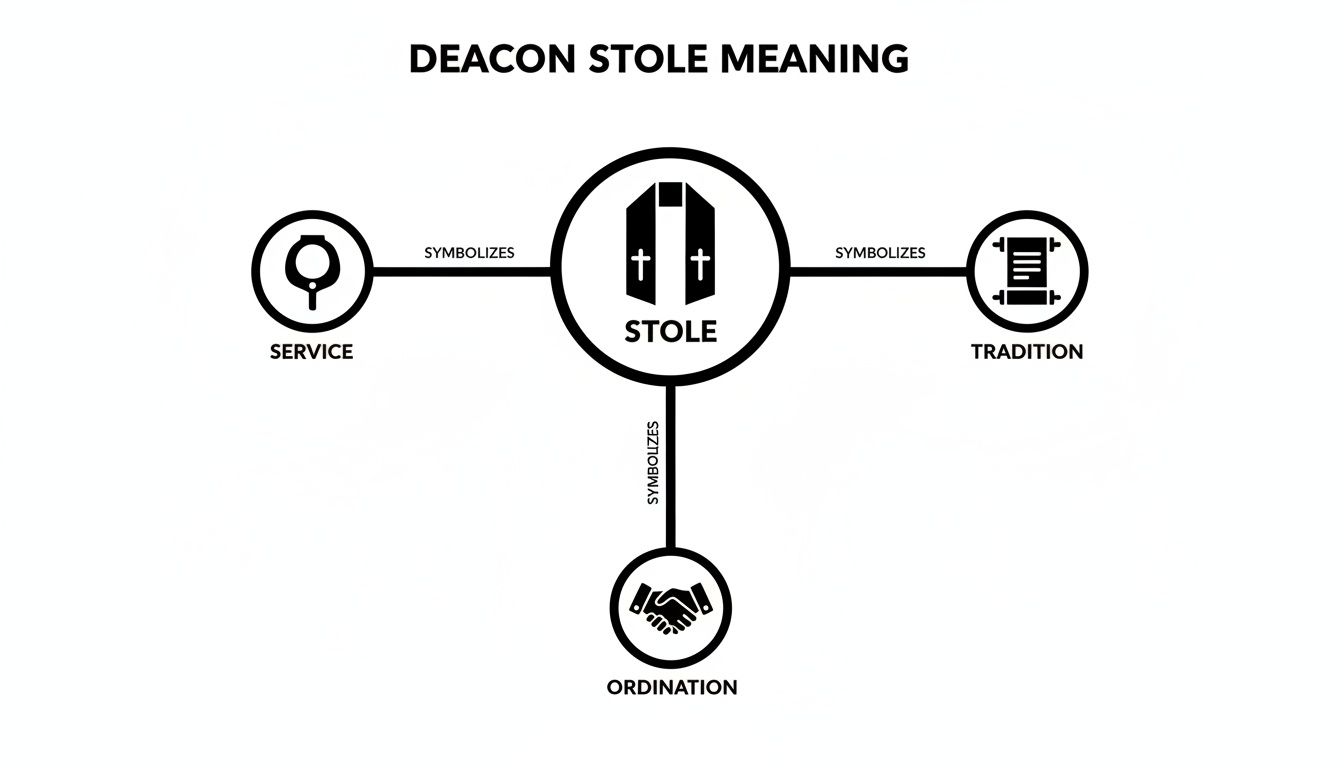
It’s a powerful fusion of service, tradition, and the sacred act of ordination, all woven into one meaningful vestment.
Decoding the Liturgical Colors of a Deacon Stole
Color inside a church is so much more than just decoration. It's a visual language, one that speaks volumes about the liturgical season and the heart of a specific service. A deacon's stole is a prominent canvas for this language, changing its hue to follow the sacred rhythm of the Christian year.
Getting this color code right helps clergy and church planners choose the perfect vestment every time. It ensures the visual feel of the worship service aligns perfectly with its theological core.
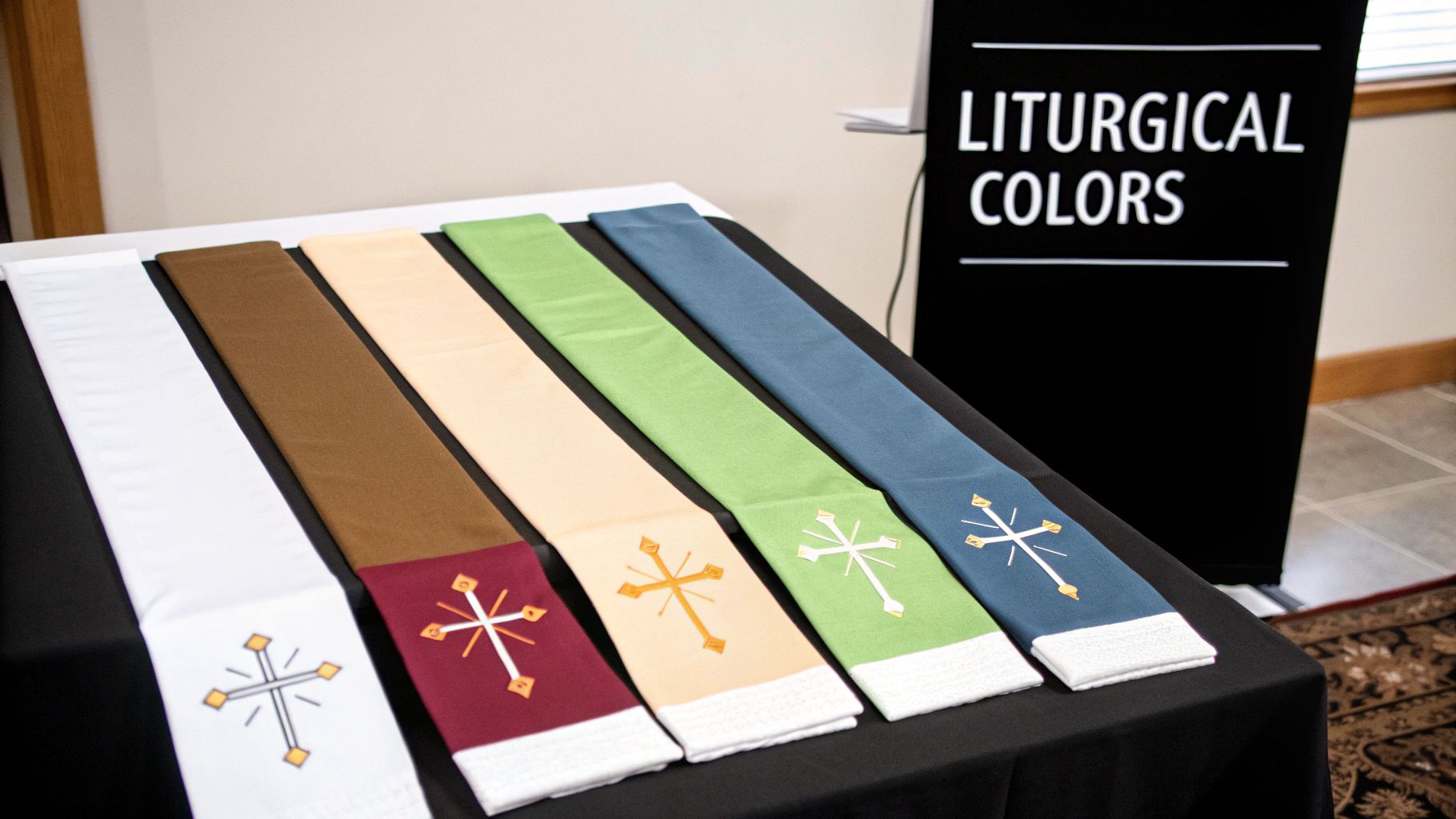
Each color has deep roots in theology and a very practical application, guiding the congregation through its journey of faith all year long. The main colors you'll see on deacon stoles aren't just random choices; they are packed with centuries of rich, symbolic meaning.
The Core Liturgical Palette
The church calendar is marked by distinct seasons, and each one has its own designated color to set the spiritual tone. You can think of it like a wardrobe for the church year, where every color signals a different mood and focus.
Here’s a quick look at the foundational colors and what they represent:
- White and Gold: These are the colors of pure joy, celebration, and the glory of God. You’ll see them during the high points of the church year—Christmas and Easter—as well as for baptisms, weddings, and even funerals, where they signify the profound hope of resurrection.
- Red: Symbolizing the fire of the Holy Spirit and the blood of the martyrs, red is a color of incredible power. It's used prominently on Pentecost Sunday, which celebrates the descent of the Holy Spirit, and also on the feast days of apostles and martyrs who gave their lives for their faith.
- Green: This is the color you’ll see most often. Green is for Ordinary Time, the longest season in the liturgical year. It represents hope, new life, and the patient anticipation of Christ's return, reflecting the ongoing, steady growth of the church.
- Violet or Purple: A color of solemnity and deep reflection, violet is reserved for the preparatory seasons of Advent and Lent. It signifies repentance, penance, and the anticipation of both the birth and the resurrection of Christ.
To help you visualize the flow of the church year, here is a simple guide to the primary liturgical colors you'll see on deacon stoles.
Liturgical Color Guide for Deacon Stoles
| Color | Symbolic Meaning | When It Is Worn |
|---|---|---|
| White/Gold | Purity, joy, triumph, glory | Christmas, Easter, weddings, baptisms, funerals, feasts of the Lord |
| Red | The Holy Spirit, passion, martyrdom, fire | Pentecost, feasts of the apostles and martyrs, Palm Sunday |
| Green | Hope, life, anticipation, growth | Ordinary Time (the period between major church seasons) |
| Violet/Purple | Penance, preparation, repentance, solemnity | Advent and Lent |
This table serves as a great starting point for ensuring the deacon's vestments are always appropriate for the occasion.
The changing colors of the deacon stole are more than just decoration; they are a silent sermon, guiding the hearts and minds of the congregation through the sacred story of salvation, week by week.
When you're thinking about the symbolism of liturgical colors for a deacon's stole, it’s also useful to see how they fit into the broader church color palettes that create the overall atmosphere of a sanctuary. These choices help build a cohesive visual and spiritual experience for everyone.
For an even deeper dive into the rich symbolism behind each color, feel free to explore our guide on the meaning behind clergy stole colors. Understanding these nuances is key to thoughtfully selecting deacon stoles and building a complete and proper liturgical wardrobe.
How to Select and Personalize Your Deacon Stole
Choosing a deacon stole is a deeply personal process, a blend of sacred tradition and your own story of faith. It’s more than just a piece of fabric; it's a vestment you'll wear during some of the most meaningful moments of your ministry. Finding the right one comes down to a few key considerations: the material, the fit, and the symbols that speak to your calling.
Let's walk through how to find—or create—a stole that is both dignified and uniquely yours.
Finding the Right Feel and Fit
The first thing you'll notice about a stole is its fabric. Different materials create a completely different look and feel. Traditional silk offers a timeless luster, while richer brocades provide a deep, satisfying texture. Many modern stoles are also made from high-quality polyester blends, which are a practical choice because they offer great durability and a beautiful drape for frequent use.
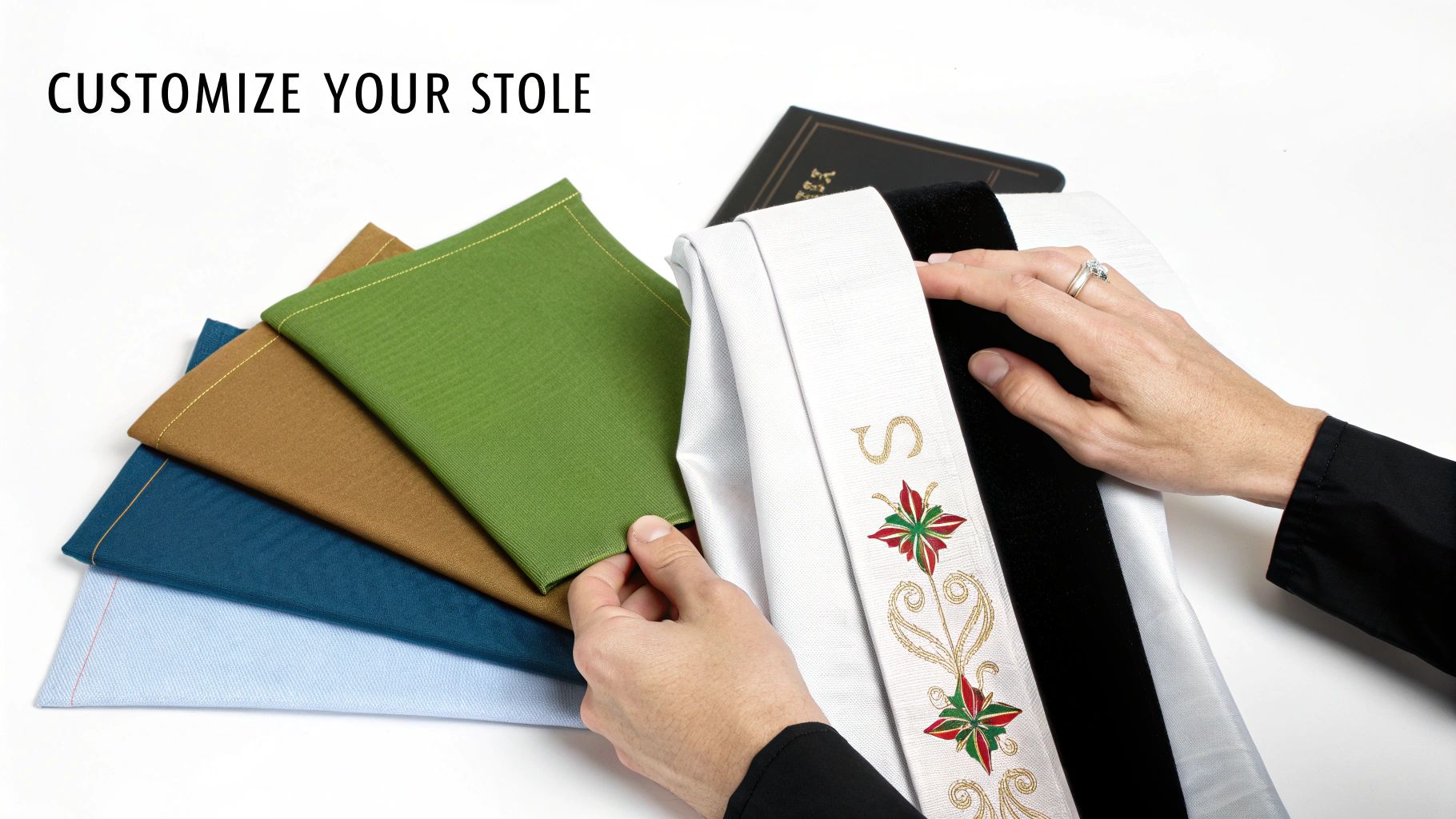
Once you've thought about the fabric, the next step is getting the fit just right. A well-fitted stole should hang gracefully over your alb and dalmatic, feeling comfortable without getting in the way. It should look professional and feel like a natural part of your vestments.
Here are the key measurements to keep in mind:
- Length: A deacon stole should typically end somewhere between your knee and mid-calf. A common total length is around 110 inches, but this can vary depending on your height.
- Width: Most stoles are about five inches wide. This gives you plenty of space for beautiful embroidery without the stole feeling bulky or overwhelming.
Making the Stole Uniquely Yours
This is where a simple vestment can be transformed into a cherished heirloom. Personalization, especially through embroidery, adds a layer of theological and personal meaning that is impossible to buy off the rack.
Think about the symbols that resonate most with your ministry. A simple cross is a powerful and timeless choice. A dove is a beautiful way to represent the Holy Spirit's guidance in your work. Another popular and deeply meaningful option is the Chi-Rho, one of the earliest symbols for Christ.
Customization isn't just about looks; it's about weaving your personal story of faith and service into the very fabric of your ministry. Adding a name, an ordination date, or your diocesan seal makes the stole a true testament to your specific journey.
At Stoles.com, we bring the same detailed customization process from our well-known graduation stoles to our entire clergy line. This allows you to browse an extensive collection of customizable deacon stoles and design a piece that will be truly significant for years to come.
These vestments are central to the worship of approximately 800 million Christians in liturgical denominations, where proper attire upholds traditions that stretch back to the 4th century. By taking the time to thoughtfully select the fabric, fit, and symbols, you’re creating a stole that will serve you faithfully throughout your ministry.
Properly Wearing and Caring for Your Stole
A finely made deacon stole is more than just a vestment; it's an investment in your ministry. Taking proper care of it from day one ensures it will remain a beautiful and dignified symbol for many years of service. It all starts with knowing how to wear it correctly—a simple act that protects the fabric and honors its deep meaning.
How to Wear Your Deacon Stole
Wearing a deacon stole isn't complicated, but doing it right ensures a clean, comfortable fit that lasts through the entire liturgy. The distinct diagonal drape is, after all, a key visual sign of the deacon's role in the church.
Just follow these three simple steps:
- Drape Over the Left Shoulder: Start by placing the stole over your left shoulder. It should hang diagonally across your body, with one end in front of you and the other behind you.
- Secure at the Right Hip: Next, bring the two ends together at your right hip. Adjust it so the stole feels secure but still allows you to move freely and comfortably.
- Fasten Securely: Use a thin cord, cincture, or even a small, discreet pin to fasten the ends together at your hip. This simple step is key to keeping the stole neatly in place over your alb or dalmatic, maintaining a polished and prayerful appearance.
Maintaining Your Investment
Good care and storage are what will truly preserve the beauty and integrity of your deacon stole. While different fabrics have different needs—and you should always check for a care label first—some universal rules can help you protect your vestment.
Here’s how to handle general upkeep and common issues:
- Cleaning: To protect the delicate embroidery and specialty fabrics, most stoles should be dry-cleaned. If you find yourself needing to spot-clean a small area, use a very gentle, pH-neutral detergent and make sure to test it on a hidden part of the fabric first.
- Handling Wax Stains: Candle wax happens. The best way to remove it is to place the stained area between two paper towels and press gently with a warm iron (never hot!). The wax will melt and get absorbed right into the paper towels.
- Storage: The absolute best way to store your stole is on a wide, padded hanger inside a breathable garment bag. This prevents sharp creases and protects it from dust. If you must fold it, do so loosely along the seams and store it flat in a cool, dry place.
By taking these simple steps, you're not just cleaning a piece of fabric; you're honoring its craftsmanship and ensuring it remains a beautiful expression of your service for every liturgy to come. A well-cared-for stole from Stoles.com is a lasting symbol of your commitment.
Common Questions About Deacon Stoles
When you're looking to purchase or commission a deacon stole, it's natural for a few practical questions to pop up. Whether you're a seminarian getting ready for ordination, a family member searching for a special gift, or a church committee member outfitting your clergy, you want to get it right. This section tackles the questions we hear most often, giving you clear, direct answers to help you feel confident in your choice.
We've gathered these common queries to provide those final bits of information you might need before making a decision.
What Is the Best Material for a First Deacon Stole?
For a brand-new deacon, the best first stole is one that balances practicality with a dignified appearance. We often recommend a high-quality polyester blend or a silk-polyester mix as an excellent starting point. These modern fabrics strike a fantastic balance, offering a beautiful, elegant drape while being durable enough for regular use and staying affordable.
Another big plus is how practical they are. These blends resist wrinkles far better than pure silk and are generally much easier to care for, which is a lifesaver for a vestment that will see frequent use. You'll find that many of the most stunning brocade stoles available today are made from these reliable blended fabrics.
As a deacon’s ministry grows, so might their collection of vestments. Pure silk or linen stoles might be added for major feast days and special services. But for that foundational, go-to piece, a versatile and resilient blend is the perfect choice to begin a ministry.
How Long Should a Deacon Stole Be?
Getting the length right is key for both comfort and a proper look. A well-fitted deacon stole should end somewhere between the knee and the mid-calf. This length allows it to drape gracefully over the alb and dalmatic without getting in the way during liturgical movements like kneeling or walking in a procession.
A very common length is about 55 inches from the center back of the neck down to the tip on one side, for a total length of roughly 110 inches. Of course, this is just an average; the perfect size really comes down to the wearer's height.
To get your ideal fit, just follow these simple steps:
- Stand up straight and relaxed.
- Drape a flexible measuring tape around the back of your neck.
- Let the tape fall over your left shoulder and across your body, just like you would wear the stole.
- Measure from the back of your neck down to the point between your knee and mid-calf. That number is the length you’re looking for.
Can a Deacon Wear a Stole at a Wedding?
Yes, absolutely. A deacon has an official and vital role in the wedding liturgy, and wearing the proper vestments—including the deacon stole—is required. The stole is the primary symbol of the deacon's ordained office and his authority to minister during the sacrament.
For a Nuptial Mass or wedding ceremony, the deacon will wear a white or gold stole. These liturgical colors are chosen because they symbolize joy, purity, new beginnings, and celebration, which are all central themes in the sacrament of matrimony. The stole is a clear visual sign of the deacon's role as the Church's official minister and witness at this sacred moment.
What Is a Popular Symbol for a Deacon Stole?
A simple, elegant cross is easily one of the most popular and meaningful symbols to have embroidered on a deacon stole. The cross is the universal sign of Christian faith and represents the selfless service that is at the very heart of the diaconate. It's a timeless choice that's always appropriate.
Another fitting and historically rich option is the Chi-Rho. This is an early Christogram created by layering the first two letters of the Greek word for Christ, connecting the wearer to the ancient roots of our faith.
Beyond these foundational symbols, many deacons pick imagery that reflects a particular part of their ministry:
- A dove is often used to represent the guidance of the Holy Spirit.
- A scallop shell is a classic symbol for baptism.
- Intertwined rings are a beautiful choice for a deacon who expects to be involved in marriage preparation and weddings.
Many also like to add a personal touch, like an ordination date or initials, which can be embroidered discreetly on the inner lining. When you're choosing a symbol, think about what speaks to your personal calling and the ministry you feel drawn to.
At Stoles.com, we understand the deep significance of every vestment. We apply the same dedication to quality and customization from our renowned graduation stoles to our clergy line, helping you find or create a deacon stole that is a true reflection of your sacred commitment. Explore our collection to find the perfect piece for your ministry at https://www.stoles.com.