

Graduation day is a huge milestone, the culmination of years of hard work. While the traditional cap and gown are universal symbols of this moment, for many graduates, the most important piece they'll wear is the one that tells their unique story: an African graduation stole.
These vibrant, culturally rich stoles worn over a graduation gown are so much more than just a colorful accessory. They are a powerful statement of achievement, heritage, and pride, transforming the standard academic uniform into a canvas of personal history and triumph.
More Than an Accessory: The Power of a Graduation Stole
Think about it. Draping a graduation stole over your shoulders isn't just about adding flair to a plain black robe. It’s about wearing your history with pride. When a student chooses a Kente cloth stole, for instance, they are connecting with centuries of tradition from West Africa, particularly from the Ashanti people of Ghana. Every single pattern and color woven into that fabric has a deep meaning, telling stories through a visual language of values, historical events, and even proverbs.
A Symbol of Achievement and Identity
For students of African descent, wearing a cultural stole is a profound act of self-expression. In academic settings where they may have navigated unique obstacles, these stoles become a bold symbol of overcoming challenges and achieving excellence. It’s a way to honor not just their own hard work, but the collective strength and successes of their ancestors and community.
For many, the Kente stole is a declaration: "I am here, I have succeeded, and I carry my heritage with me." It’s a powerful, visible celebration of Black Excellence and cultural identity on a deeply personal and public stage.
This guide is here to walk you through the rich and beautiful world of African graduation stoles. We'll dive into the symbolism behind the designs, help you figure out how to choose the perfect one for your big day, and give you tips on how to wear it with the honor and respect it deserves. This is all about making sure your graduation day truly reflects who you are and the journey you've traveled.
What You Will Discover
We've designed this guide to help you understand every aspect of choosing and wearing your graduation stole with pride. We'll cover everything you need to know to feel fully prepared for your celebration:
- The Language of Patterns: We’ll break down the meanings behind the intricate designs and vibrant colors you see in Kente and other African textiles.
- Choosing Your Stole: You'll learn the difference between authentic, handwoven stoles and machine-made versions, so you can pick one that feels right for you and your budget.
- Wearing and Preserving: Get practical advice on the right way to wear your stole and how to care for it so it can become a lifelong keepsake.
From understanding ancient symbols to personalizing a design that’s all your own, you'll find everything you need here to make your graduation sash a meaningful part of your story. You can start exploring beautiful options right now in our collection of graduation honor cords and stoles.
Decoding the Woven Language of Your Stole
Imagine a language not spoken, but woven from thread. That's the soul of Kente cloth, the most iconic fabric you'll see in African graduation stoles. It’s so much more than just a beautiful piece of fabric; Kente is a visual alphabet, telling stories of history, values, and cultural wisdom with every color and pattern.
Originally created by the Ashanti people of Ghana, Kente was once reserved for royalty and life’s biggest moments. Each design is a form of non-verbal communication, turning a simple garment into a powerful statement about who you are and where you come from. Think of each motif as a word, carefully chosen to build a message.
The Meaning Behind the Motifs
When you pick a Kente stole, you're not just choosing a design—you're choosing a story. Those intricate geometric patterns aren’t random. They are ancient symbols packed with deep meanings that can perfectly capture a graduate's journey.
Here are a few common motifs you might see:
- Nea Onnim No Sua A, Ohu: This symbol, often seen as a specific block pattern, translates to, "He who does not know can know from learning." It’s a powerful nod to the value of knowledge and lifelong education, making it an incredibly fitting choice for a graduation ceremony.
- Obi Nka Bi: This pattern signifies harmony and peace, carrying a warning against offending others. It speaks to the importance of community and collaboration—things you definitely learned about during your academic path.
- Adwini Asa: Translating to "My skill is exhausted," this design represents the peak of creativity, ingenuity, and perfection. For a graduate, it’s a beautiful way to symbolize the mastery and expertise you've gained through years of hard work.
This concept map helps visualize how a graduation stole isn't just an accessory, but a powerful symbol of your identity, pride, and personal story.
As you can see, a stole is far more than fabric; it’s a tangible piece of your entire journey.
A Spectrum of Symbolism
The colors woven into Kente are just as important as the patterns. Every single hue carries its own symbolic weight, adding rich layers of meaning to your stole's message. Getting a basic grasp of Color Theory for Beginners can really help you appreciate the depth behind these intricate designs.
Here’s a quick rundown of some of the most prominent colors:
- Gold/Yellow: Royalty, wealth, and spiritual purity.
- Green: Growth, new beginnings, and prosperity.
- Red: Passion, sacrifice, and political or spiritual moods.
- Black: Maturation, spiritual energy, and connection to the ancestors.
- Blue: Peace, love, and harmony.
By understanding this visual language, you can choose an African graduation stole that doesn't just look amazing, but speaks directly to your personal story and future goals. If you want to dive even deeper into its history, check out our guide on what is a Kente stole.
How to Choose Your Perfect Graduation Stole
Picking out the right African graduation stole is a big deal. This isn't just another piece you wear with your cap and gown; it’s a powerful statement about your journey, your heritage, and everything you’ve accomplished. With so many options out there, it can feel a bit overwhelming, but this guide will walk you through exactly what to look for to find a stole that feels right for you.
Your first major decision is choosing between an authentic, handwoven Kente stole and a more common machine-made version. Both are great options, but they serve different needs. What matters most to you? Is it the connection to traditional craftsmanship, the price point, or the ability to customize every detail? Knowing the difference is the first step to making a choice you'll be proud of.
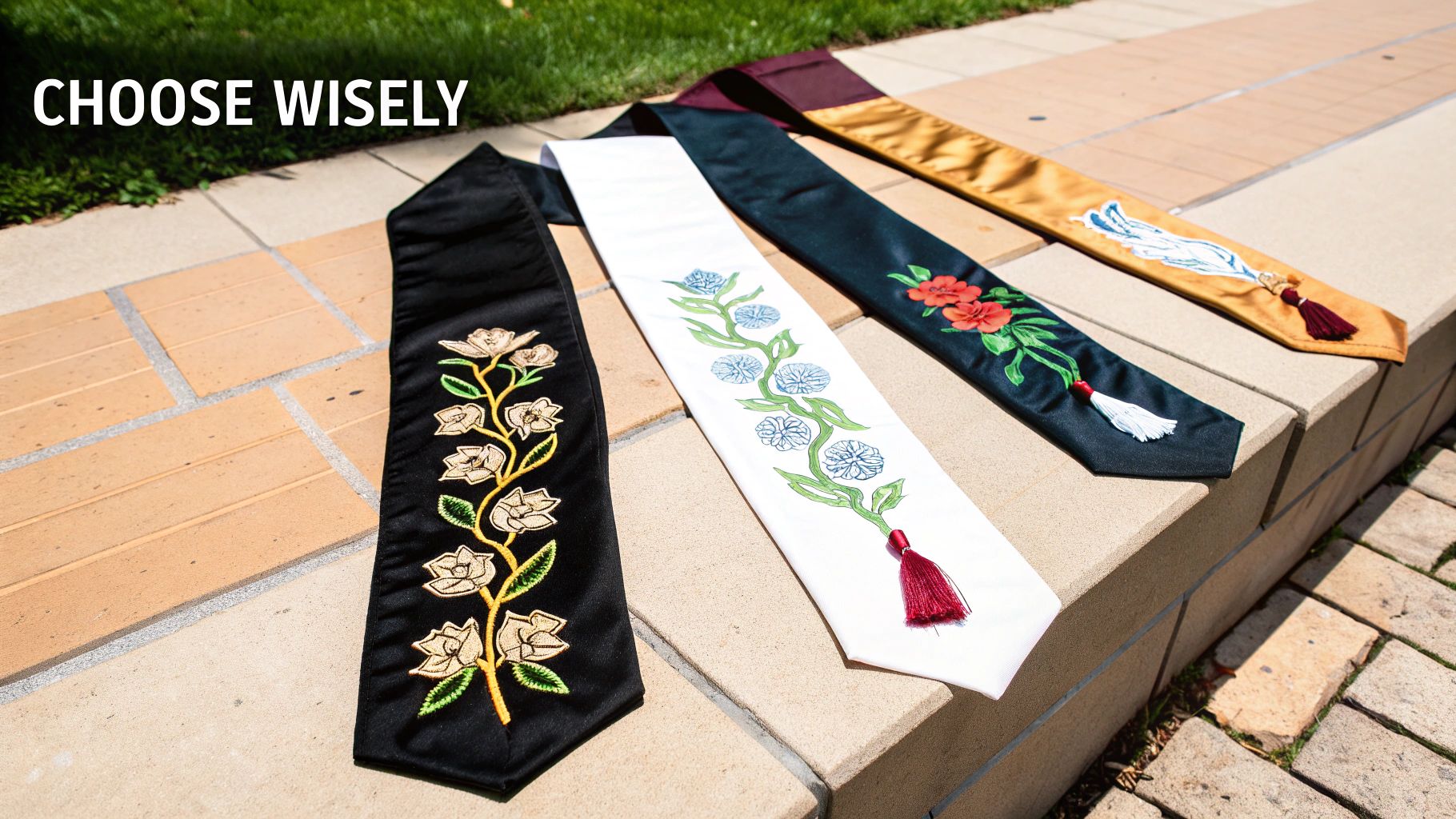
Authentic Handwoven vs Machine-Made Stoles
An authentic handwoven Kente stole is nothing short of a masterpiece. Crafted by highly skilled artisans in Ghana, often using a traditional loom, every single one is unique. You can feel the quality—the fabric has a rich, substantial texture because the patterns are woven directly into the cloth, not just printed on top. It’s a labor-intensive process, which gives it a higher price tag but also a profound cultural value.
On the other hand, machine-made stoles are usually made from smooth satin or polyester, with the vibrant Kente patterns printed onto the surface. They are much more affordable and easy to find, offering a brilliant look without the higher cost. While they don't have the same textured feel or artisanal story as handwoven pieces, they are an excellent, budget-friendly way to celebrate your heritage.
At the end of the day, your choice comes down to personal connection. A handwoven stole links you directly to a centuries-old Ghanaian tradition. A printed stole offers a beautiful and accessible way to display that same cultural pride.
To make the decision a little easier, let's break down the key differences. This table helps you compare the features of an authentic handwoven stole against a more common machine-made one, so you can see which aligns best with your priorities for graduation day.
Comparing Handwoven vs Machine-Made Stoles
| Feature | Authentic Handwoven Kente Stole | Machine-Made Printed Stole |
|---|---|---|
| Material | Traditionally woven cotton and silk threads | Smooth polyester or satin fabric |
| Texture | Rich, textured, and substantial feel | Lightweight, smooth, and glossy finish |
| Authenticity | High cultural and artistic authenticity | An accessible representation of the design |
| Price | Typically higher due to skilled labor | More affordable and budget-friendly |
| Appearance | Patterns are woven into the fabric itself | Patterns are printed onto the surface |
After looking at the table, you should have a clearer idea of whether the investment in a handwoven piece or the practicality of a machine-made stole is the better fit for you.
Making Your Stole Uniquely Yours
After you’ve picked the type of stole, it’s time for the fun part: personalization. Customization is what turns your stole from a beautiful accessory into a one-of-a-kind piece of your story. This is your chance to make your African graduation stole a true reflection of your unique path.
Think about adding details that mean something special to you:
- Your Name and Graduation Year: The most classic touch to mark this specific moment in time.
- Your Degree or Major: A perfect way to honor the field you've dedicated years to, like "B.S. in Nursing" or "Juris Doctor."
- Fraternity or Sorority Letters: Show your pride in the Greek organization and the community that supported you along the way.
- Adinkra Symbols: You can add specific symbols that resonate with your personal values, like Gye Nyame (supremacy of God) or Sankofa (learning from the past).
These custom touches transform your graduation sash into a keepsake you'll look back on for years to come.
Finding Reputable Vendors and Ordering Tips
The popularity of Kente stoles has created a huge market. The use of African graduation stoles in North America really took off in the 2010s, and now they're a common and powerful sight at commencement ceremonies. You'll find tons of retailers offering dozens of options. Prices for mass-produced versions typically range from $15 to $35, while authentic handwoven stoles imported from Ghana will cost more. This has become a multi-million-dollar niche in the graduation apparel world. You can learn more about its growth in this global graduation stole industry forecast.
So, where do you find a quality stole? Start by checking out online stores that specialize in cultural regalia. Campus groups like the Black Student Union (BSU) are also a fantastic resource—they often place group orders with trusted suppliers to ensure everyone gets an authentic, high-quality stole.
When you're ready to find the perfect stole for your big day, explore our collection of authentic African Graduation Sashes and get ready to celebrate your achievement in style.
Wearing Your Stole with Confidence and Pride
When you walk on graduation day, your African graduation stole isn't just another part of the outfit—it's a powerful symbol of your entire journey and heritage. Knowing how to wear it properly is a sign of respect for that tradition, and it ensures your stole stands out as the proud focal point it deserves to be. It’s a simple process, but getting the details right makes a huge impact.

Start by draping the stole evenly over your shoulders so it hangs straight down the front of your graduation gown. The center seam should sit right at the back of your neck, creating a clean V-shape in the front. Just take a moment to make sure both sides are the same length and that all your beautiful custom embroidery or patterns are clearly visible.
Securing Your Stole for the Ceremony
Once you have it draped perfectly, you’ll want it to stay that way through the whole ceremony—from the long walk in to the moment you toss your cap. Stoles have a tendency to slip and shift as you move, but there’s an easy fix. A small, discreet safety pin fastened to your gown at the back of your neck (right under the collar) will keep it anchored without anyone seeing it.
You could also use a bit of fabric tape or a few tiny pins on the inside of your gown, right at the shoulders. This is a great trick to stop the stole from sliding forward or backward, keeping that perfect drape. The goal is to make sure any fasteners are totally hidden to maintain a sharp, elegant look.
Styling with Other Academic Regalia
It's common for graduates to wear multiple pieces of regalia, like honor cords or medallions, to represent all their hard work. Layering them correctly is key so each piece is displayed respectfully without looking cluttered. Your African graduation stole should always be the final, outermost layer.
Think of your stole as the main event—a statement piece that represents your cultural identity and personal success. Placing it on top of everything else gives it the prominence it truly deserves.
Here’s the simple order to follow when you're getting ready:
- Graduation Gown: Put this on first as your base layer.
- Honor Cords: Next, drape any graduation honor cords around your neck. They should lie flat against your gown.
- Medallions: If you have an academic medallion, place it over the cords.
- Graduation Stole: Finally, lay your stole over everything. Make sure it hangs smoothly and evenly on both sides.
Following this order guarantees that every single symbol of your achievement is visible. It lets you walk across that stage with the confidence and immense pride you've earned.
Preserving Your Stole as a Lifelong Keepsake
Your African graduation stole is so much more than just a piece of fabric you wear on commencement day. It’s a tangible piece of your journey, a memento of an incredible achievement. Once the ceremony is over and the cap is thrown, you’ll want to preserve this symbol so it remains a vibrant keepsake for years to come. How you care for it really comes down to the material it’s made from.
Taking care of your graduation stole isn't just about cleaning it; it’s about honoring the story it tells and the hands that may have crafted it. The right preservation techniques will protect those delicate threads, vibrant colors, and intricate details that make your stole uniquely yours. This way, it can be displayed with pride or even passed down as a treasured heirloom.
Care Instructions Based on Material
The very first step is figuring out what your stole is made of. An authentic, handwoven Kente stole needs a completely different touch than a durable, machine-made polyester one. Using the wrong cleaning method can cause damage that you just can't undo.
For Authentic Handwoven Kente Stoles:
- Spot Clean Only: If you get a small stain, gently blot it with a soft, damp cloth and a tiny drop of mild soap. Whatever you do, don't rub or scrub the fabric—you could easily damage the delicate weave.
- Avoid Submerging: Never soak or machine wash a handwoven Kente stole. The intricate threads can unravel or shrink when they get completely saturated with water.
- Air Dry Carefully: Lay the stole flat on a clean, dry towel. Keep it away from direct sunlight or any heat source. Hanging it can actually stretch the fibers and pull it out of shape.
For Machine-Made Polyester Stoles:
- Gentle Hand Wash: These stoles are much more resilient. You can hand wash them in cool water with a gentle detergent if they need a full cleaning.
- Rinse Thoroughly: Make sure you get all the soap out. Any residue left behind can make the colors look dull over time.
- Low-Heat Ironing: If your polyester stole gets wrinkled, you can iron it on a low setting. It’s a good idea to place a pressing cloth (like a clean cotton tea towel) between the iron and the stole to protect any printed designs or embroidery.
Think of your handwoven Kente stole like a piece of fine art. You wouldn't put a painting in a washing machine, and the same gentle, respectful handling should apply to this culturally significant textile.
Displaying and Storing Your Stole
After the celebration, don’t just tuck your stole away in a drawer where it can be forgotten. Displaying it is a fantastic way to keep your achievement and heritage front and center in your daily life. One of the most popular ways to do this is by framing it in a shadow box alongside your diploma, tassel, and maybe a favorite graduation photo.
If you’d rather store it, doing it properly is key to preventing fading and deterioration. An acid-free archival box is your best bet for protecting the fabric from turning yellow over time. Fold it gently, placing acid-free tissue paper between the folds to stop creases from setting in. Store the box in a cool, dark, and dry place—think the back of a closet or under a bed—to shield it from damaging sunlight and humidity.
Whether it’s hanging on your wall or carefully stored away, taking these simple steps will keep your African graduation stole in pristine condition, serving as a lifelong reminder of your hard-earned success.
The Rise of Cultural Stoles in Modern Graduations
What was once a small, personal practice has absolutely exploded into a powerful tradition at graduation ceremonies all over the world. Seeing graduates wearing vibrant, culturally rich stoles over their standard gowns isn't a rare sight anymore—it's become a meaningful, celebrated part of the whole experience. This isn't just some passing trend; it points to a much deeper shift toward personal expression and cultural pride within our academic halls.
These stoles, particularly the african graduation stoles inspired by traditional Kente cloth, are now a powerful symbol of "Black Excellence." For so many students, graduation day is the finish line of a long, often difficult race. Wearing a stole that reflects their heritage is a beautiful way to honor their ancestors, celebrate their community, and proudly state who they are. It turns the uniform academic robe into a personal story of strength and success.
From Niche Tradition to Mainstream Celebration
So, how did this happen? A huge amount of credit goes to the tireless work of student-led groups. Black Student Unions (BSUs) and other cultural organizations on campuses nationwide have been the real champions of this tradition. They were the ones organizing group orders, teaching their classmates about the symbolism, and pushing for these stoles to be officially recognized in commencement ceremonies.
What started with these passionate student groups has now blossomed into a mainstream celebration of diversity. More and more, universities and colleges are getting it—they understand how important it is for students to express their cultural identities. This institutional embrace has transformed wearing a cultural stole from a quiet act of defiance into a joyful, public declaration of a student's entire journey.
The cultural stole is so much more than graduation regalia. It's a bridge connecting a student's academic achievement to their personal heritage. It tells the world, "I made it, and I'm bringing my whole history with me."
The Market Reflects the Movement
This powerful cultural shift naturally sparked massive student demand, which in turn has created a bustling commercial market. Just look around—Kente and African-patterned graduation stoles are now a standard item in any graduation catalog. We're seeing dozens of unique designs and variations, with promotions and marketing campaigns timed perfectly to the academic calendar. The availability of these stoles skyrocketed between 2018 and 2025. You can see just how extensive the options have become by exploring the offerings from major graduation suppliers.
This commercial growth is a direct mirror of a wider change in academia. The demand for stoles customized with class years, specific groups like the Black Student Union, or powerful themes like "Black Girl Magic" proves that students are actively looking for ways to celebrate their unique paths. The rise of the african graduation stole is a crystal-clear sign that modern graduations are becoming more personal, inclusive, and meaningful than ever before. To learn more about how different cultures are being represented in commencement ceremonies, check out our guide on cultural stoles.
Common Questions About African Graduation Stoles
As you get ready for one of the most important days of your life, it's totally normal to have a few questions about your graduation regalia. And when it comes to something as personal and meaningful as an African graduation stole, you want to make sure every detail is perfect. We’ve put together the most common questions we hear from graduates and their families to give you clear, simple answers.
Our main goal here is to help you feel confident and ready. That way, you can focus on what really matters—celebrating your amazing accomplishment. From timing your order to knowing the rules at your school, this FAQ will walk you through the practical side of wearing your heritage with pride.
How Far in Advance Should I Order My Stole?
It's always a good idea to order your graduation stole at least four to six weeks before your graduation day. This window gives you a comfortable cushion for production and shipping, which is especially important if you’re adding custom embroidery like your name, degree, or graduation year.
Keep in mind, vendors get swamped during the peak graduation season from April to June. Ordering early means you won't have to sweat about your stole arriving in time for your photos and the big ceremony. If you're organizing a group order for a club like the Black Student Union, starting the process two or three months ahead is a very smart move.
Can I Wear a Cultural Stole at My School?
Absolutely. The vast majority of universities and high schools don't just allow cultural stoles like Kente cloth—they encourage them. These stoles are widely seen as powerful symbols of identity, achievement, and heritage. They've become a celebrated part of making commencement ceremonies more inclusive and reflective of the diverse student body.
That said, it never hurts to double-check your school's specific rules for graduation regalia. A quick visit to the commencement section of your school's website or a phone call to the registrar's office will clear up any questions you might have.
Can I Wear Both an Honor Cord and a Stole?
Of course! It is extremely common for graduates to wear both an African graduation stole and one or more honor cords. Think of it this way: each piece of your regalia tells a different part of your story—your academic journey and your personal identity. The trick is just layering them correctly so everything is visible.
For a clean, polished look, just follow this simple order:
- First, put on your graduation gown.
- Next, place any honor cords you have around your neck.
- Finally, drape your cultural stole right over the top of the cords.
This method ensures your stole stands out as the main event, while your academic honors are still displayed for everyone to see.
At Stoles.com, we believe your graduation day should be a perfect reflection of your unique story. Explore our extensive collection of cultural, custom, and academic stoles to find the perfect piece to celebrate your journey. Visit Stoles.com to design your keepsake today.