

A Catholic deacon stole is one of the most visible and important symbols of a deacon's ministry. More than just a piece of liturgical clothing, it's a sacred vestment that represents his office and his call to a life of service.
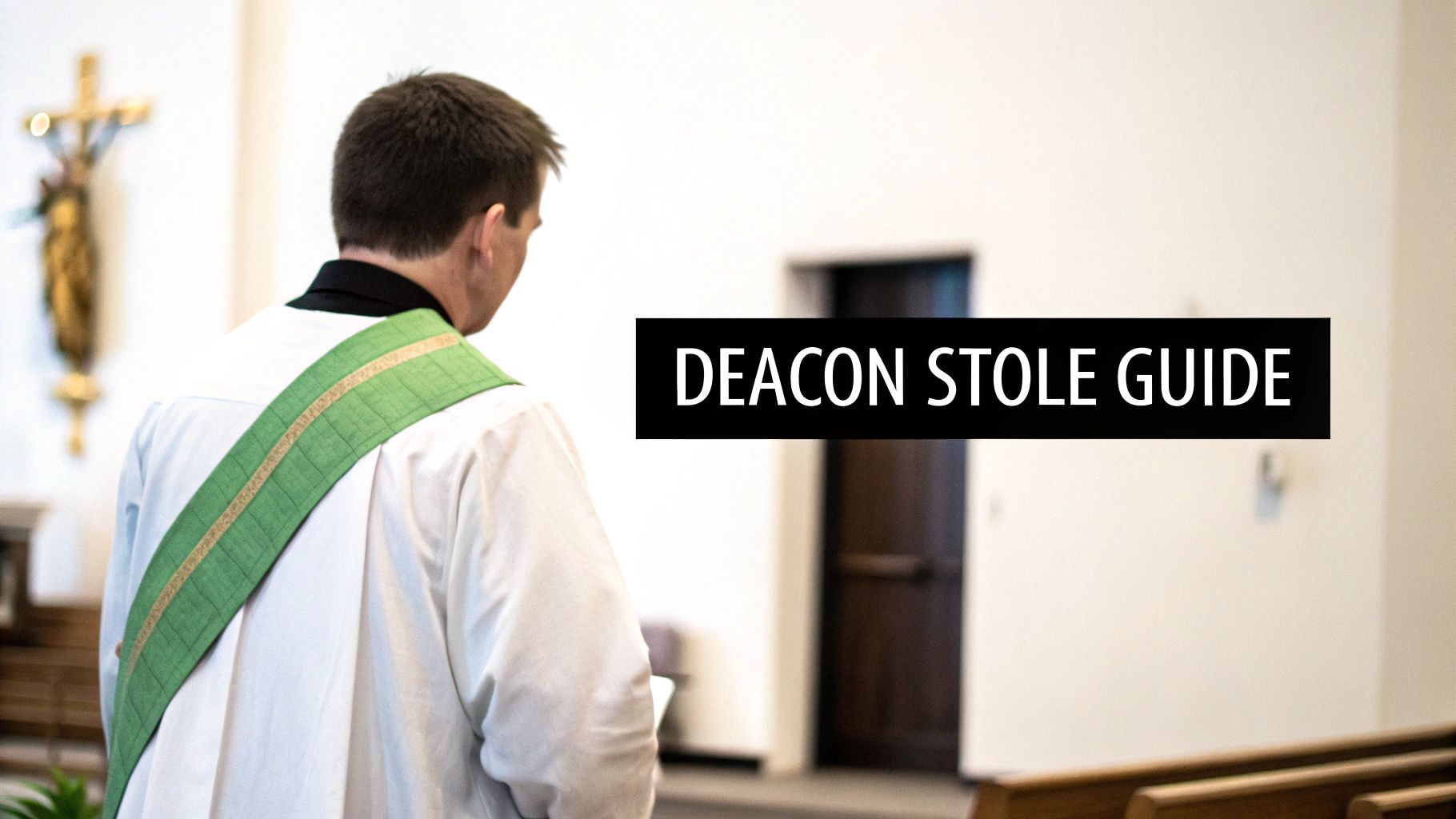
The most distinctive feature is how it's worn: diagonally across the body, from the left shoulder down to the right hip. This immediately sets a deacon apart from a priest, who wears his stole hanging straight down from the neck.
Understanding the Catholic Deacon Stole
If you're a newly ordained deacon, a parish staff member ordering vestments, or a loved one searching for a meaningful ordination gift, you've come to the right place. This guide will walk you through everything you need to know about the deacon stole.
We'll cover its deep symbolism and why it's worn diagonally. We'll also get into the practical details, from liturgical colors and sizing to how to properly care for this sacred garment. Understanding the stole's significance is key—it transforms a simple vestment into a real, tangible link to centuries of Church tradition and the deacon's unique role within it.
The Stole as a Symbol of Service
The way a deacon wears his stole is packed with meaning. Draped like a servant's sash, it's a constant, visual reminder of his primary call: to serve God and the community. It’s an image of someone ready for action, prepared to minister to the people of God.
This isn't just for looks or identification; it’s a powerful symbol of his commitment.
The diagonal placement of the deacon's stole is a powerful visual representation of the "yoke of Christ," which the deacon takes upon himself in a spirit of humble service to God's people. It signifies a readiness to assist at the altar and to carry out acts of charity in the world.
The stole represents the three core pillars of the diaconate:
- Proclaiming the Gospel: Deacons are the proper ministers for reading the Gospel during Mass.
- Assisting at the Altar: They play a vital role in preparing the altar and assisting the priest during the liturgy.
- Ministry of Charity: The stole is a sign of their duty to serve the poor, the marginalized, and those in need.
Knowing this, it's clear why choosing the right deacon stole is such a significant and prayerful decision. To find a vestment that truly honors this sacred calling, feel free to explore our collection of high-quality Clergy & Religious Stoles.
The History and Symbolism of a Deacon's Stole
The catholic deacon stole is far more than just a piece of liturgical clothing. It's a sacred vestment that carries the weight of nearly two thousand years of Church history. Its journey, from a simple, practical cloth to a profound symbol of the diaconate, tells a deep story about service, charity, and unwavering commitment.
When you understand this history, the stole transforms from a mere piece of fabric into a real, tangible connection to the apostles and the very first servants of the Church. Its origins trace all the way back to the 4th century, evolving from a functional item into a key piece of clerical attire that signifies the unique responsibilities given to a deacon.
From Practical Cloth to Sacred Symbol
Believe it or not, the stole started life as an orarium—a simple linen cloth, almost like a napkin or scarf, used by Roman officials for practical things like wiping their face. The early Church adopted this everyday item and infused it with sacred meaning. It quickly became an emblem of office, a clear sign for those ordained for ministry.
The stole has been a cornerstone of Catholic vestments since the 4th century. It was Pope Sylvester I who first designated it for deacons in Rome, a major turning point for liturgical dress. By the 8th century, records show it was in widespread use, having fully evolved from the simple orarium into a formal badge of the diaconal order. Its design was a narrow band of fabric, draped uniquely over the deacon's left shoulder and fastened at his right side—a style that set him apart from priests, who wore theirs around the neck.
You can dive deeper into this fascinating transformation in this helpful guide on the history of clergy stoles.
The stole represents the "sweet yoke of Christ" (Matthew 11:29-30), which a deacon willingly takes upon himself. It is not a burden of oppression but a yoke of loving service, signifying his commitment to carry out the works of charity and proclaim the Gospel with humility.
This symbolism gets right to the heart of what it means to be a deacon. The stole acts as a constant, physical reminder of the spiritual weight and incredible grace of his ordination vows.
A Visual Mark of Diaconal Service
The standardized way a deacon wears his stole—diagonally across the body—became an immediate visual cue of his specific role in the Church. While a priest wears the stole around his neck, symbolizing his authority to preside over the sacraments, the deacon's cross-body style brings to mind a servant’s sash, always ready for action.
This distinct placement reinforces the three core pillars of a deacon's ministry:
- Ministry of the Word: The stole is worn when he proclaims the Gospel.
- Ministry of the Altar: It signifies his role in assisting the priest during the Mass.
- Ministry of Charity: It represents his call to serve the poor and marginalized in the community.
Every time a deacon puts on his stole, he’s not just getting dressed. He is reconnecting with this rich history and reaffirming his personal commitment to Christ the Servant. This is what makes choosing and wearing a deacon's stole such a deeply meaningful act.
How a Deacon Stole Differs from a Priest Stole
At first glance, the stoles worn by deacons and priests might seem pretty similar. They're both long, decorated strips of fabric, and they both follow the liturgical colors of the season. But the real difference—the one that speaks volumes about their distinct roles in the Church—is all in how they're worn.
It's an immediate and intentional distinction, a constant visual reminder of their unique ministries.
A priest wears his stole draped around the back of his neck, with the two ends hanging straight down in parallel. This symbolizes the authority and priestly power he receives at ordination, especially his role in presiding over the sacraments. You can think of it as a yoke, representing the sacred responsibilities he carries for his flock.
On the other hand, a deacon's stole is always worn diagonally. It goes over the left shoulder and is then fastened at the right hip, creating a distinctive cross-body sash. This unique style is loaded with symbolism that points directly to the deacon's ministry of service and action.
The Sash of Service
The easiest way to remember the difference is to think of the catholic deacon stole as a "sash of service." It’s a perfect analogy. A sash brings to mind readiness and mobility—it's the kind of garment worn by someone prepared to get to work and assist. This visual cue perfectly captures what the diaconate is all about.
This infographic shows how the stole evolved over centuries from a simple cloth into a clear symbol for different clerical roles.

As the diagram shows, while both stoles share a common ancestor in the ancient orarium, their symbolic paths split to represent two very different, yet complementary, ministries.
The diagonal placement isn't just a quirky tradition; it's a theological statement. It signifies that the deacon is a minister of the Word, an assistant at the altar, and a leader in works of charity. His vestment reflects his dynamic, hands-on role in the Church’s mission, standing right alongside the priest but with a purpose all his own.
To quickly see the differences side-by-side, here's a simple comparison table.
Deacon Stole vs Priest Stole Key Differences
| Feature | Deacon Stole | Priest Stole |
|---|---|---|
| How It's Worn | Diagonally, over the left shoulder to the right hip | Around the back of the neck, hanging straight down |
| Primary Symbolism | Service, action, readiness, and assistance | Priestly authority, governance, and the "yoke of Christ" |
| Analogy | The "Sash of Service" | The "Yoke of Responsibility" |
| Liturgical Role | Minister of the Word, Altar, and Charity | Presider of the Eucharist and Sacraments |
This table makes it clear that while they are both stoles, their form and function tell two different stories.
At its core, the priest's stole represents governing authority, while the deacon's represents active ministry. It’s a simple, powerful difference in how the vestment is worn, but it beautifully communicates the complementary relationship between the priesthood and the diaconate.
Decoding Liturgical Colors and Sacred Symbols
A catholic deacon stole isn't just a piece of fabric; it's a powerful visual storyteller. Through its colors and embroidered symbols, it communicates profound theological truths, aligning the deacon’s ministry with the very rhythm of the Church’s liturgical year.
Understanding this visual language is crucial when selecting a stole. The goal is to find one that is not only beautiful but also liturgically appropriate for every sacred occasion. The colors are never just for decoration—they set the spiritual tone for worship. A deacon’s collection will certainly grow over time, but it should always start with the four primary liturgical colors to be ready for the full cycle of the Catholic calendar.
The Liturgical Color Guide
Think of liturgical colors as a guide that immerses the faithful in the mysteries being celebrated. Each color has a very specific job, connecting the appearance of the ministers to the spiritual focus of the day.
Here’s a breakdown of the core colors:
- Green: Worn during Ordinary Time, this color symbolizes hope, life, and anticipation. You'll see it most frequently, representing the periods of growth between the major liturgical seasons.
- Purple (or Violet): A color of penance, preparation, and sacrifice. It is worn during Advent and Lent, calling everyone to a period of reflection and turning back to God.
- White (or Gold): Representing joy, purity, and glory, white is the color for the Christmas and Easter seasons. It also appears on major feast days for the Lord, the Virgin Mary, angels, and saints who were not martyrs.
- Red: This vibrant color symbolizes the Holy Spirit, passion, and the blood of martyrdom. It’s worn on Pentecost Sunday, Good Friday, and the feast days of apostles and martyrs.
"The use of specific liturgical colors is a tradition that dates back centuries, helping the faithful to enter more deeply into the mystery of the liturgical season. For a deacon, wearing the correct color is an act of obedience and a visible sign of unity with the universal Church."
Getting these distinctions down is the first step in building a complete set of liturgical vestments. For a deeper dive, you can learn about the meaning behind clergy stole colors in our comprehensive guide.
Common Symbols and Their Meanings
Beyond color, the symbols embroidered on a catholic deacon stole add another layer of rich meaning. These images are far from random decorations; they are visual prayers that speak directly to the deacon's role as a minister of the Word, the Altar, and Charity.
Some of the most common symbols you'll see include:
- Basin and Towel: This powerful image comes straight from Jesus washing the feet of his disciples (John 13:1-17). It is the ultimate symbol of servant leadership and is especially fitting for a deacon, whose entire ministry is rooted in service.
- Wheat and Grapes: Representing the Eucharist, these symbols connect the deacon to his essential role at the altar. They signify the simple gifts of the earth that become the Body and Blood of Christ.
- Dove: The dove is a universal symbol of the Holy Spirit. It is often featured on red stoles for Pentecost or on stoles worn during Confirmations and ordinations, signifying the descent and presence of the Spirit.
How to Choose the Perfect Deacon Stole
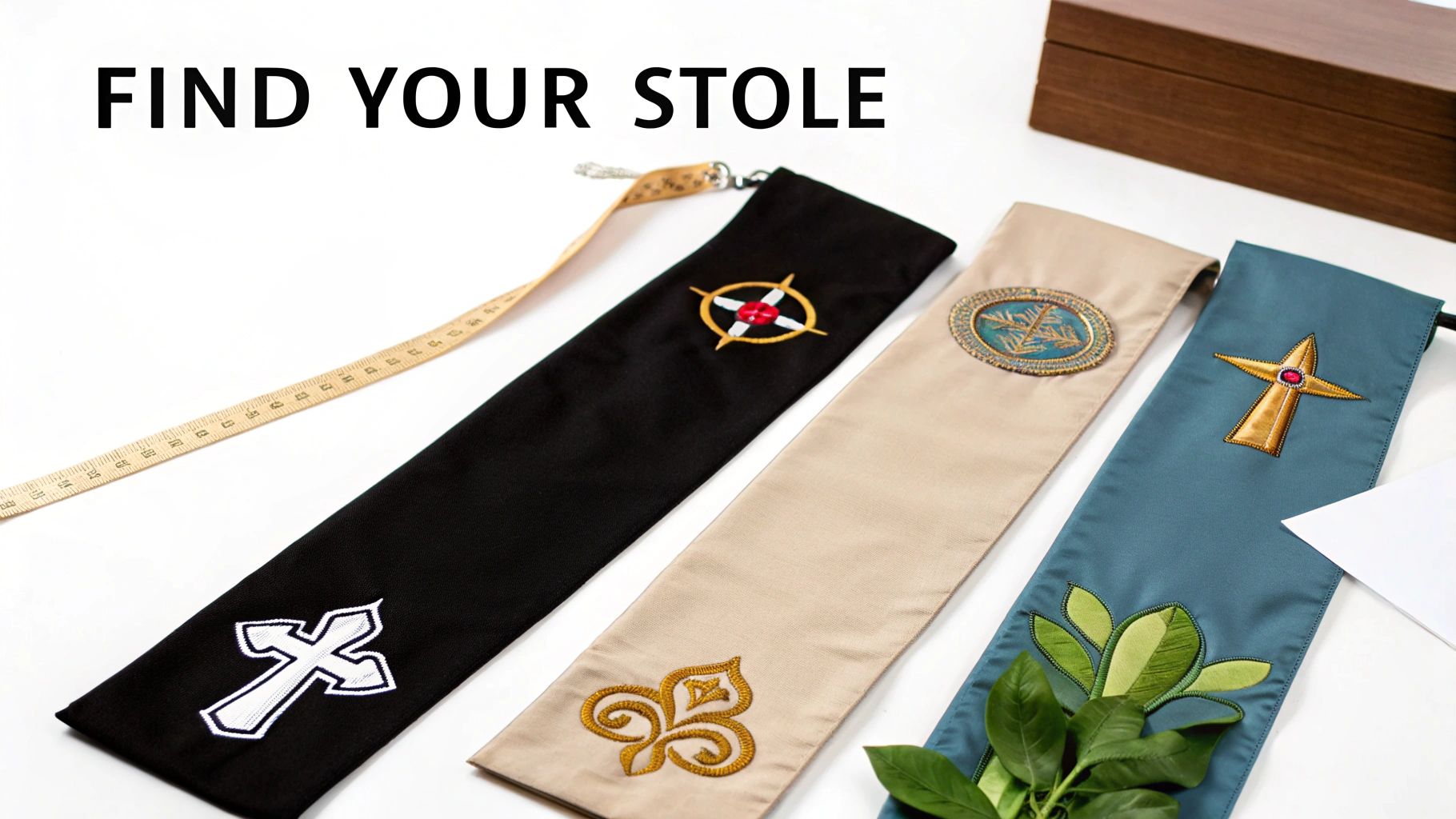
Picking out a catholic deacon stole is a deeply personal decision, whether it's for your own ministry or as a gift for a newly ordained deacon. This isn't just a piece of fabric; it's a sacred vestment. It needs to reflect the dignity of the diaconate, blending quality craftsmanship with real liturgical meaning. You’ll want to think about the material, any personal touches, and of course, getting the fit just right.
The fabric choice is your starting point. It dictates everything—how the stole hangs, how long it will last, and the overall impression it makes. For high feasts and the most solemn services, nothing beats the rich texture and graceful drape of traditional silk brocade. But for daily Mass or more frequent use, a modern polyester blend can be a fantastic, practical option. They’re known for being resilient, wrinkle-resistant, and much easier to care for.
Material and Customization Options
Beyond the fabric itself, customization is what can turn a standard vestment into a true testament of faith. Embroidery is the most common way to add that unique, personal layer of significance to a catholic deacon stole.
Some of the most popular personalizations include:
- Ordination Dates: A simple, powerful reminder of the day a deacon was consecrated for his life of service.
- Sacred Monograms: Classic symbols like the Chi Rho (☧) or the Alpha and Omega (Α and Ω) beautifully connect the stole, and the wearer, to Christ.
- Biblical Symbols: Think of a basin and towel, loaves and fishes, or a shepherd's crook. These can be chosen to reflect a deacon's particular ministries or even his patron saint.
It's these details that make the vestment a cherished possession. For instance, a beautifully embroidered white deacon stole isn't just for Easter anymore; it becomes a personal emblem of faith.
With the restoration of the permanent diaconate after the Second Vatican Council, the need for these vestments grew immensely. In fact, as of 2023, there are roughly 50,000 permanent deacons serving worldwide, with over 19,000 in the U.S. alone. Each one needs vestments that properly symbolize their unique call to servant leadership—a role with roots stretching all the way back to the New Testament. You can learn more about the history of the permanent diaconate and its modern revival.
Ensuring the Perfect Fit
A stole that fits properly is crucial, not just for comfort but for liturgical decorum. If it’s too long, it gets in the way. Too short, and it just looks awkward and ill-proportioned.
Getting the measurement right is simple. Just drape a flexible measuring tape over the left shoulder and down to the right hip, exactly how the stole will be worn. The ideal length has the tape ending around mid-thigh or just above the knee.
This one easy step ensures the final stole will hang correctly and allow for graceful, unhindered movement during the liturgy. Taking that extra time to select the right material, add meaningful embroidery, and nail down the correct size will give you a high-quality catholic deacon stole that will be worn with pride for years of service to come.
Looking After Your Liturgical Vestments
A Catholic deacon stole isn't just another piece of fabric; it's a sacred item central to a deacon's ministry and often a significant investment for the individual, their family, or the parish. Taking good care of it is essential to preserve its beauty and dignity, ensuring it looks its best for years of faithful service.
A few simple habits for storing, cleaning, and pressing your stole will protect the fabric and keep any delicate embroidery from getting damaged.
Proper storage is your first line of defense. Always hang your stole on a wide, padded hanger to avoid those deep creases that can form on the shoulders. Try to give it some space—avoid stuffing it in a crowded closet where it can get crushed and wrinkled.
Cleaning and Pressing Your Stole
When it comes to cleaning, the first step is always to check the care label. Materials like silk, brocade, and polyester all need to be handled differently.
For most Catholic deacon stoles, professional dry cleaning is by far the safest bet. This is especially true for stoles with intricate embroidery or made from delicate fabrics. Trying to wash it at home can lead to colors bleeding or, worse, irreversible damage to the threads.
If you find yourself dealing with a minor spill, here’s what you can do:
- Act Fast: Gently blot the spot right away with a clean, damp, white cloth. Whatever you do, don't rub it! Rubbing will only spread the stain and push it deeper into the fibers.
- Use a Gentle Solution: For a non-oily stain, a tiny amount of mild soap mixed with cool water can do the trick.
- Test It First: Always test your cleaning solution on a hidden spot, like the back of the lining, to make sure it won’t cause any discoloration.
When you need to press out some wrinkles, be very careful.
Never put a hot iron directly onto the stole itself, and especially not over the embroidered sections. The intense heat can easily melt synthetic threads or flatten the beautiful, raised texture of the design.
The best way to do it is to lay a clean, white pressing cloth (a thin cotton towel or even a pillowcase works well) over the stole. Set your iron to a low or medium heat and gently press down—don't drag the iron across the fabric. This method will safely smooth out the wrinkles while protecting the sacred symbols and craftsmanship you invested in.
Answering Your Questions About Deacon Stoles
To round things out, let's go over a few of the most common questions we hear about catholic deacon stoles. Think of this as a quick-reference guide to clear up any lingering details, making sure you feel completely confident before choosing or caring for this sacred vestment.
Knowing these answers can make the whole process—whether you're buying for yourself or as a special ordination gift—a more informed and prayerful one.
Why Do Deacons Wear Their Stoles Differently Than Priests?
The way a deacon wears his stole is packed with meaning. It's worn over the left shoulder and then secured at the right hip, which is meant to look like a servant's sash. This diagonal style represents the deacon's ministry of service and charity, showing he is ready for action.
This is a very intentional visual cue to set the deacon's role apart from a priest's. A priest wears his stole around the back of his neck, with the ends hanging straight down. This symbolizes the "yoke of Christ" and his authority to preside over the sacraments and offer absolution.
A simple way to remember it is to think of the deacon's stole as a "sash of service" and the priest's stole as a "yoke of authority." Both point to Christ, but they highlight different, complementary parts of ordained ministry.
This simple difference in how the stole is worn is a constant, physical reminder of the unique roles within Holy Orders.
Can Anyone Buy a Deacon Stole?
Absolutely. Anyone can purchase a catholic deacon stole. In fact, they are one of the most popular and meaningful ordination gifts from family, friends, or the parish community celebrating a new deacon. You’ll find a huge variety of options out there, from simple, elegant designs to incredibly detailed custom pieces.
Of course, while anyone can buy one, only an ordained deacon can actually wear the stole during Mass and other official duties. When you're purchasing one as a gift, it's a wonderful opportunity to add custom embroidery—like an ordination date or a meaningful sacred symbol—to make it a truly personal and cherished keepsake for years to come.
How Many Stoles Does a Deacon Typically Need?
To be fully prepared for the Church's liturgical calendar, a deacon really needs a core set of stoles covering the four main liturgical colors. This foundational collection ensures he's ready for any Mass or celebration throughout the year.
The must-haves are:
- Green for the long season of Ordinary Time.
- Purple for the reflective seasons of Advent and Lent.
- White for big celebrations like Christmas and Easter, and for saints who weren't martyrs.
- Red for Pentecost, Good Friday, and the feast days of apostles and martyrs.
These four are the essential building blocks. Many deacons also add a Rose stole for Gaudete Sunday (in Advent) and Laetare Sunday (in Lent). Over time, it's common to expand the collection with stoles that have special symbols for Marian feasts or other important occasions.
At Stoles.com, we offer a wide selection of high-quality Clergy & Religious Stoles suitable for every liturgical season and occasion. Explore our collection to find the perfect vestment that honors the sacred calling of the diaconate.