

When you see graduates filing into their commencement ceremony, you’ll notice their gowns are decorated with a vibrant mix of colorful cords and stoles. While they might seem like simple accessories, they’re actually key pieces of academic regalia, each telling a distinct story.
Honor Cords are the thin, twisted ropes you see, and they typically signify a very specific, individual achievement. Think academic honors or membership in a prestigious honor society.
Graduation Stoles, on the other hand, are the wider, sash-like garments worn over the shoulders. These represent broader affiliations, like celebrating cultural heritage with a Kente Stole, belonging to a student organization, or representing a field of study.
Understanding Your Graduation Regalia
As you look across a sea of graduates, their regalia is a visual language that tells you about each person’s unique journey. These aren't just decorations; they’re symbols of hard work and identity.
A good way to think about it is that a cord is like a medal—a specific badge of honor for a distinct accomplishment. A stole is more like a banner, proudly displaying a larger part of who you are or what group you belong to.
This difference is why you'll often see a graduate wearing multiple cords, each one representing a different honor society or academic award. However, they usually only wear one or two stoles that signify the most important parts of their college experience, like their major or cultural background.
To help you tell them apart at a glance, here’s a quick comparison.
Cords vs Stoles at a Glance
This table breaks down the main differences between graduation cords and stoles, giving you a clear summary of what each one represents and how they look.
| Attribute | Graduation Cords | Graduation Stoles |
|---|---|---|
| Appearance | Thin, twisted ropes, often knotted | Wide, sash-like fabric panels |
| Symbolism | Specific individual achievements | Broader affiliations and identity |
| Common Uses | GPA honors (cum laude), honor societies | Academic major, cultural heritage, Greek life |
| How Many? | Often multiple cords are worn | Typically one or two stoles |
Ultimately, both cords and stoles are powerful symbols of a graduate's hard work, dedication, and personal story. They turn a standard cap and gown into a personalized testament to their time in school.
Cords: A Badge of Specific Achievement
Graduation cords are most commonly tied to academic excellence. For instance, specific color combinations often signify different levels of GPA-based honors like summa cum laude (highest honors) or magna cum laude (high honors).
Nationally recognized honor societies also use them to identify their members at graduation. The simple, elegant design of a cord keeps the focus right where it belongs: on the specific achievement it represents.
Stoles: A Banner of Broader Identity
Because stoles offer a much larger canvas, they're the perfect way to represent broader aspects of a graduate’s story. Their prominent placement over the gown makes them ideal for showcasing things like:
- Academic Discipline: Many universities assign specific stole colors to different colleges within the school. You might see light blue for the College of Education or green for graduates from the College of Medicine.
- Organizational Membership: Fraternities, sororities, and other student organizations often have members wear custom stoles featuring their Greek letters, crests, or colors.
- Cultural Heritage: A stole can be a powerful and beautiful way to celebrate your roots. Designs like international flag stoles or vibrant Kente cloth stoles are popular ways for graduates to honor their heritage. To dive deeper, you can learn more about what is a stole in graduation and how it represents your journey in our detailed guide.
Of course, celebrating this huge milestone goes beyond just the regalia. Many families and friends look for other meaningful ways to honor the graduate, often exploring unique graduation gifts to find something that lasts a lifetime.
What Do the Different Colors Mean?
When you look out at a sea of graduates, the bright colors dotting their gowns aren't just for show. The cords and stoles create a vibrant tapestry at every commencement, and each specific hue tells a story of dedication, discipline, and success. This visual language is a time-honored code that communicates a graduate's academic field, level of achievement, or their affiliation with a specific honor society.
Think of the colors as a visual resume. Just as a title on a business card tells you someone's role, a particular color on a cord or stole instantly signals a graduate's area of study or a special honor they've earned. It’s a powerful, symbolic tradition that lets institutions celebrate the incredible range of accomplishments across their graduating class.
This quick breakdown shows how cords and stoles play distinct, but equally important, roles in the ceremony.
As you can see, while both are key graduation accessories, cords are most often tied to specific academic honors. Stoles, on the other hand, tend to represent broader affiliations like your field of study or membership in a group.
Decoding Academic Fields of Study
Many universities follow a standardized color system, often guided by the American Council on Education, to represent different academic disciplines. While schools can have their own unique variations, many colors have meanings that are recognized nationwide. This system makes a graduate’s major instantly identifiable to anyone in the know.
Here are some of the most common color associations for cords and stoles you'll see representing fields of study:
- Light Blue: Represents the field of Education, worn by our future teachers and administrators.
- Drab (or Brown): Signifies degrees in the world of Business, Accounting, and Commerce.
- Green: Denotes the study of Medicine or Pharmacy.
- Golden Yellow: Symbolizes majors in the Sciences, like biology, chemistry, or physics.
- White: Represents the Arts, Humanities, and English.
- Orange: Worn by graduates from the demanding field of Engineering.
This color code turns the entire graduation ceremony into a living, breathing display of the university's diverse academic community.
Symbolizing Honors and Achievements
Beyond your major, colors are absolutely crucial for signifying scholastic achievement and membership in honor societies. Gold Cords are the undisputed champion here, almost universally recognized as the color for the highest academic honors. A graduate wearing gold cords and stoles is often being recognized for achieving Summa Cum Laude—the highest possible distinction.
Following that, silver often represents Magna Cum Laude (high honors), and other colors might be used for Cum Laude (honors). Honor societies also have their own distinct color combinations. For example, the prestigious Phi Beta Kappa society uses pink and sky blue, while the Golden Key International Honour Society is known for its signature blue and gold cords.
These colors aren't just decorative flair. They are hard-earned symbols of relentless work and genuine intellectual curiosity. For a deeper dive, you can learn more about graduation honor cords color meaning in our comprehensive guide, which explores the symbolism for dozens of societies and honors levels.
How to Personalize Your Graduation Story
Graduation is about so much more than just academics. It's a celebration of your entire journey—the hurdles you cleared, the communities you found, and the heritage that made you who you are. While honor cords are fantastic for recognizing specific scholarly achievements, custom stoles offer a beautiful canvas to tell the rest of your story. They turn your regalia from a simple uniform into a true statement of pride.
This move toward personalization isn't just a fleeting trend; it's a real shift in how we celebrate. More and more, graduates are choosing cords and stoles that represent their unique identities, making commencement ceremonies more vibrant and meaningful than ever before. A stole becomes a wearable narrative of who you are and where you've come from.

Celebrating Heritage and Identity
One of the most powerful ways to personalize your regalia is by honoring your cultural roots. For many graduates, their achievement isn't just their own—it's a landmark moment for their entire family and community. A cultural stole is a proud nod to that shared legacy.
A custom stole does more than just decorate a gown; it weaves a graduate's personal history, cultural pride, and unique accomplishments into the fabric of the ceremony itself.
Some of the most popular ways to do this include:
- Flag Stoles: These are perfect for international students or anyone who wants to honor their national heritage. A flag stole proudly displays a country's colors for all to see.
- Kente Stoles: Originally from Ghana, these brightly colored, intricately patterned stoles are a stunning celebration of African heritage and are worn by graduates from all walks of life.
- Mexican Serape Stoles: Featuring the iconic striped patterns of traditional Mexican blankets, these stoles are a beautiful and vibrant tribute to Hispanic and Latinx culture.
These stoles are completely reshaping graduation ceremonies. In fact, data shows that multicultural designs like Kente cloth and Mexican serape styles are leading the trends for 2025 as graduates invest more in identity-driven regalia. It's all part of a massive $6.1 billion market for graduation items in 2024, where stoles let graduates truly "wear their story." You can learn more about the rise of personalized stoles and how they're defining modern commencements.
Showcasing Affiliations and Milestones
Your story also includes the groups and experiences that shaped your time in school. Custom stoles are the perfect way to recognize these important connections and personal triumphs, adding another layer of meaning to your cap and gown.
Many graduates choose stoles to represent:
- Greek Life: Members of fraternities and sororities often wear stoles featuring their organization's Greek letters, colors, and crest.
- First-Generation Status: A First-Generation Stole is an incredibly meaningful symbol, celebrating the monumental achievement of being the first in a family to graduate from college.
- Personal Identity: Stoles featuring Pride flags or other symbols of personal identity allow graduates to celebrate their authentic selves on their big day.
By choosing a stole that reflects your heritage, affiliations, or personal milestones, you make your graduation attire a true reflection of your unique journey. If you're feeling inspired to design your own, our guide on creating a customized cap and gown has plenty of great ideas to get you started.
Choosing and Customizing Your Regalia
Once you get the hang of what cords and stoles represent, the fun part begins: creating your own. This is your chance to turn a standard-issue cap and gown into a personal statement, a true keepsake that tells your story. It all comes down to a few key choices, from the feel of the fabric to the design that makes it uniquely yours.
The first decision is usually the material. Most quality stoles are made from either satin or polyester, and each has its own vibe. Satin gives you that luxurious sheen and smooth, elegant drape—it’s the premium choice for a really polished look. Polyester, on the other hand, is the workhorse; it's durable, resists wrinkles, and keeps its vibrant color, ensuring your stole looks sharp all day and for years after.
Material and Customization Options
With the fabric picked out, you can dive into personalization. This is where your stole goes from being just an accessory to a piece of your personal history. There are a few ways to get your message across, each with a different look and feel.
Here are the most popular ways to customize:
- Embroidery: This is the classic, high-end choice. Using stitched thread gives your design a textured, professional feel that really lasts. If you're looking to add a crest or logo, using custom embroidery logo services is the way to go for a sharp, clean finish. It's perfect for names, Greek letters, and official emblems.
- Screen Printing: When you have a bold graphic or a really detailed design, screen printing is your best friend. It delivers crisp lines and bright, solid colors, making it a great option for complex logos or imagery.
- Photo Stoles: A more modern take, this method lets you print high-resolution photos directly onto the fabric. It’s a fantastic way to create a truly one-of-a-kind memento, capturing a special memory or honoring someone important to you.
Ordering Tips for Individuals and Institutions
Whether you're a single graduate getting ready for the big day or an administrator organizing things for the whole class, planning is everything. For students, starting the process early is a lifesaver, especially if you want detailed custom work. You can explore creating your own Custom Graduation Stoles or find pre-designed Flag Stoles to celebrate your heritage.
For schools and universities, ordering Honor Cords and stoles in bulk is a smart move. It usually brings the cost down and guarantees every graduate's regalia looks consistent. The best approach is to coordinate with different departments and student groups to place one large, consolidated order.
There’s no denying that personalized cords and stoles are a huge part of the modern graduation experience. On Google Trends, search interest for stoles can hit a peak of 95 in May, blowing tassels (at 36) out of the water. This isn’t just a trend; it's about value. A basic stole might sell for $7.63, but a custom first-generation stole can fetch nearly double that at $13.29. It just goes to show that the personal stories are what people truly value. You can dig deeper into these graduation accessory trends to see just how much personal expression matters on graduation day.
Why Cords and Stoles Mean More Today Than Ever Before
Let's face it, graduation ceremonies used to be pretty uniform. Everyone wore the same cap and gown, and that was that. But things have changed. Today's ceremonies are all about celebrating the individual, and that's where cords and stoles come in.
These aren't just colorful accessories anymore. They've become a way for graduates to tell their story without saying a word. Your cap and gown become a canvas, and each cord or stole is a brushstroke representing a hard-won honor, a cultural heritage, a club membership, or a unique academic journey. It makes your achievement visible to everyone in the room.
It's All About Personal Expression
As ceremonies shift to celebrate unique stories, graduates naturally want to show what made their path special. Investing in a high-quality, custom stole isn't just about looking sharp for photos—it’s about feeling truly seen and acknowledged for your specific accomplishments.
This isn't just a local fad; it's a worldwide movement. The proof is in the numbers. The global market for graduation stoles is on track to hit USD 1.2 billion by 2035, growing at a steady clip of 5.2%. This boom shows just how much cords and stoles have become essential symbols of pride for students and schools. You can get the full scoop on the booming graduation stole market here to see how it's reshaping commencement.
In today’s ceremonies, a stole is not merely an accessory. It is a wearable narrative, a testament to a graduate's unique path and the communities that supported them along the way.
This trend is particularly strong in North America, where both schools and students are driving demand for more personalized regalia. An embroidered Honor Stole from a place like Stoles.com or a vibrant sash showing off a national flag are no longer rare sights—they're becoming central to the celebration.
When you choose to add a personal touch to your regalia, you're not just buying an accessory. You're joining a meaningful global movement that validates your unique story and ensures your big day feels completely, authentically yours.
Preserving Your Graduation Keepsakes
Your graduation stole and honor cords aren't just accessories for the day; they're tangible symbols of your hard work, late nights, and the entire journey you've completed. Taking proper care of them ensures these keepsakes stay just as vibrant as your memories, turning them from ceremony attire into treasured mementos for years to come.
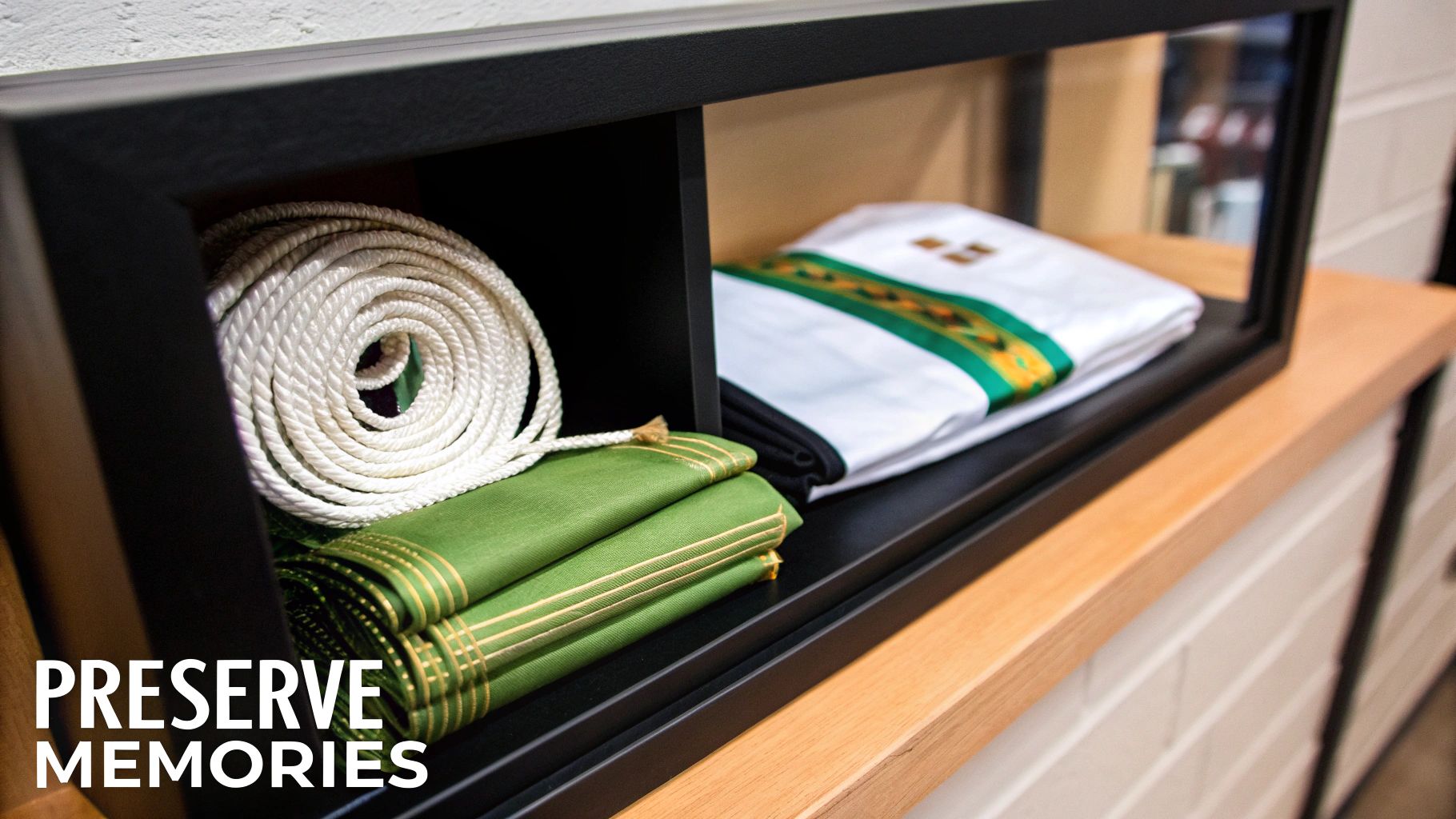
Once the celebration is over, it’s important to clean your regalia the right way. Most satin or polyester stoles just need a gentle hand-wash with mild soap in cool water. For small smudges, a quick spot-clean will do the trick. Definitely avoid the washing machine—it can be too rough on delicate embroidery or custom printing.
To keep it looking sharp and wrinkle-free, always let your stole air dry by laying it flat or hanging it up. If you absolutely need to iron it, use the lowest heat setting and always place a thin cloth, like a pillowcase, between the iron and the stole to protect the fabric.
Storing and Displaying Your Regalia
Proper storage is the secret to long-term preservation. Find a cool, dry place for your cords and stoles, far away from direct sunlight which is notorious for fading bright colors over time. Tucking them into a garment bag offers an extra layer of defense against dust and moisture.
Your graduation regalia tells a story of accomplishment. Displaying it turns that story into a daily source of inspiration and a beautiful piece of personal history.
But why hide these memories in a closet? Consider putting them on display. A shadow box is a fantastic way to create a personal exhibit with your stole, cords, and tassel all together. You could also have your stole professionally framed, turning it into a classy piece of art for your home or office. It’s the perfect way to make sure your investment in a high-quality keepsake from Stoles.com lasts a lifetime.
Your Top Questions About Cords and Stoles, Answered
As commencement gets closer, you've probably got the big things figured out—cap, gown, diploma frame. But it's often the smaller details, like how to handle your cords and stoles, that bring up last-minute questions.
Think of this as your final check-in. We've gathered the most common questions we hear from graduates to give you quick, clear answers. The goal is to make sure you walk across that stage feeling confident, proud, and focused on your achievement, not fussing with your regalia.
Can I Wear Multiple Cords and Stoles?
This is easily the most-asked question, and for good reason! You've worked hard for your honors.
When it comes to honor cords, the answer is a definite yes. It’s incredibly common for students with multiple academic honors or honor society memberships to wear a cord for each one. Every single cord represents a unique accomplishment, so you should absolutely display them all.
Stoles are a bit different. While you can wear more than one, it can get a little bulky and visually overwhelming. Most graduates pick one or two that mean the most to them—perhaps one for their academic major and another celebrating their cultural heritage.
Who Gets to Wear Specific Cords and Stoles?
Eligibility isn't a free-for-all; it's set by your university or the organization granting the distinction. Here’s a quick breakdown:
- Honor Cords: These are typically earned. They're reserved for students who hit a specific GPA benchmark (think summa cum laude) or are officially inducted into a recognized honor society.
- Organizational Stoles: These signify belonging. They're for members of fraternities, sororities, student government, or other campus clubs.
- Cultural Stoles: These are a powerful personal statement. Any graduate who wants to celebrate their heritage can choose to wear one.
Pro Tip: Always double-check your university’s graduation handbook. Some schools have specific rules about which non-academic cords and stoles are permitted during the official ceremony.
What's the Right Way to Wear My Cords and Stoles?
Getting the placement right makes all the difference for a polished, respectful look on graduation day.
A stole should be draped evenly over your shoulders so it hangs down the front of your gown. The key is to make sure both sides are the same length.
Cords are worn the same way—draped around the back of your neck so they fall neatly down the front. If you’re wearing several cords, a little trick is to use a small safety pin to fasten them together behind your neck. This keeps them from getting tangled or shifting around while you walk.
At Stoles.com, we believe every graduate's story is worth celebrating. Find the perfect way to tell yours by exploring our collection of high-quality, customizable Flag Stoles, Honor Stoles, and more.