

More than just a piece of fabric, a clergy stole is a powerful, visible symbol of ordained ministry. It’s the primary visual cue that sets a minister apart, representing the "yoke of Christ" and the sacred duty to serve a congregation. This long, scarf-like vestment is an essential part of liturgical practice, worn during worship, sacraments, and other sacred ceremonies.
What Are Clergy Stoles and Why Do They Matter?

At its most basic, a clergy stole is a narrow band of cloth worn over the shoulders, draping down the minister's front. But its meaning goes so much deeper, rooted in centuries of church history and theology. Think of it as a powerful, non-verbal tool that communicates a person's role and commitment during a service.
This simple garment is far from a mere accessory. For many ministers, the act of putting on a stole is a moment of spiritual preparation—a physical reminder of their calling and the grace given to them to carry out their duties. It’s a tangible link to a sacred promise.
The Symbolism Behind the Stole
The central symbol of the stole is the "yoke of Christ," inspired by Matthew 11:29-30, where Jesus invites his followers to "take my yoke upon you." This isn't a yoke of oppression but one of shared purpose and gentle, guiding service. By wearing the stole, clergy acknowledge their commitment to serve with humility and faith.
Beyond this core idea, the stole carries several other layers of meaning:
- Ordained Authority: It functions as a badge of office, signifying the authority to preach, lead sacraments like baptism and communion, and offer pastoral care.
- Priestly Service: It visually connects the modern-day minister to an unbroken chain of spiritual leaders reaching back through Christian history.
- Immortality and Grace: Historically, the stole has also symbolized the promise of immortality through faith and the divine grace bestowed upon the ordained.
A Brief Glimpse into its History
The stole we see today has a rich backstory that deepens its significance. This narrow band of fabric, typically 2 to 4 inches wide and about 8 feet long, has been a key part of Christian liturgical dress since at least the 4th century.
Its origins are often traced back to the Roman orarium, a practical scarf or towel that gradually evolved. By the 9th century, it had become the definitive symbol of ordained ministry, marking priestly authority in traditions like the Roman Catholic, Anglican, and Methodist churches.
To give you a clearer picture, here's a quick rundown of what a stole represents.
Quick Guide to Clergy Stoles
| Aspect | Description |
|---|---|
| What It Is | A long, narrow liturgical vestment worn over the shoulders. |
| Primary Symbolism | The "yoke of Christ"—representing service and shared burden. |
| Who Wears It | Ordained ministers (deacons, priests, bishops, pastors). |
| When It's Worn | During worship services, sacraments, preaching, and official ceremonies. |
| Key Function | A visual marker of ordained authority and sacred calling. |
This table just scratches the surface, but it highlights how this single garment communicates so much about a person's role in the church.
The stole is one of the most visible and recognized symbols of ordained ministry. It silently communicates a person's role, authority, and commitment to their sacred calling, making it a crucial element in the visual and spiritual life of the church.
This visible marker of faith is especially prominent when clergy participating in public worship, such as the National Day of Prayer, put their sacred office on full display. The presence of these vestments reinforces the solemnity and gravity of such occasions. Whether you're a newly ordained minister, a seminary student, or a church leader, understanding the meaning behind stoles for clergy enriches your appreciation for this timeless tradition.
Tracing the History of the Clergy Stole
The clergy stole is a garment absolutely steeped in tradition, but its journey from a common Roman accessory to a profound symbol of spiritual authority is a fascinating one. To really get a feel for the modern stole, you have to look back at its humble beginnings. It didn't start as a sacred vestment at all, but as a practical item in the Roman Empire—a perfect example of how everyday objects can take on deep spiritual meaning over time.
You see, the ancestor of the stole was the Roman orarium, which was basically a linen scarf or handkerchief. This was something used by the upper classes for purely practical reasons, like wiping your face. It was a status symbol, sure, but its job was secular. The early church, however, had a knack for adopting and repurposing common items, breathing new, sacred life into them.
From Practical Scarf to Sacred Symbol
As Christianity began to spread, the orarium was adopted by deacons, mostly for practical use during services. But over the next several centuries, this simple cloth started its symbolic transformation. It went from being just a useful item to a distinct badge of office, first signifying a deacon's role and, eventually, the authority of all ordained ministry.
This shift didn't happen overnight. It was a slow, organic process where the scarf became narrower and more decorative, shedding its practical roots to embrace its ceremonial future. By the early Middle Ages, its identity as a key liturgical vestment was set in stone, representing the "yoke of Christ" that clergy willingly take upon themselves.
The evolution of the clergy stole mirrors the church's own journey, transforming a common, everyday item into a powerful symbol of service, authority, and divine calling. Its history is a reminder that the most sacred traditions often have the most ordinary beginnings.
Key Moments in the Stole's Evolution
The design and meaning of stoles for clergy were really shaped by a few key periods in church history. Each era left its own unique mark, refining the garment into the vestment we recognize today.
- The Early Church (4th-6th Centuries): The orarium first gets a mention in church councils, which established its use by deacons and formalized its place in services. At this point, it was still a pretty simple, functional item.
- The Carolingian Renaissance (8th-9th Centuries): During this time of liturgical standardization, the stole became more definitively associated with priests and bishops, not just deacons. Its design became more uniform across different regions, solidifying its role as a cross-denominational symbol of ordination.
- The High Middle Ages (11th-13th Centuries): The symbolism got much deeper. The stole was explicitly linked to the yoke of Christ and the ropes used during his Passion, adding powerful layers of theological meaning. Embroidery and other embellishments became more common, reflecting the growing artistic richness of the church.
The stole’s development from a wide Roman shawl into the narrower, often ornate vestment we see now reflects over 1,300 years of symbolic refinement. First introduced in Italy around 600-690 AD, these garments gradually slimmed down from 6-8 inches to just 3-4 inches wide. This change made room for the intricate embroidery that became so popular during the Renaissance. In fact, some sources note that nearly 90% of bishops' stoles featured gold threads to symbolize nobility and the sacredness of their office. You can learn more about the fascinating history of clergy stoles and their complete transformation.
The Modern Clergy Stole
Today, the standard clergy stole measures between 7.5 and 9 feet long, a dimension that became the norm in the 20th century. This length allows it to be worn in different ways depending on the clergy's rank—draped straight down for a priest or bishop, or worn diagonally for a deacon. The rich history woven into every thread continues to give meaning to its modern use, connecting today's ministers with an ancient lineage of faith and service. Understanding this past gives a profound appreciation for every stole worn in worship today.
Understanding the Language of Liturgical Colors
In the life of the church, colors aren't just decorative; they tell a story. Liturgical colors are a silent, visual language that telegraphs the mood, theme, and spiritual focus of every season on the church calendar. When a clergy member chooses a stole, they're doing more than just matching their vestments—they're stepping into a rich, symbolic tradition. Each and every hue woven into stoles for clergy carries a deep meaning, guiding the congregation through a shared journey of faith that moves from joyful celebration to solemn reflection.
Think of it like a theological calendar brought to life. These colors provide an immediate, non-verbal cue that connects that day's service to the much larger story of the Christian year. When a minister walks out wearing a deep violet stole, the congregation instinctively knows it's a time for preparation and penitence. This visual rhythm reinforces the flow of worship, making it a much more immersive and meaningful experience for everyone involved.
White and Gold For Peak Celebrations
White is the color of pure, unbridled joy. It speaks of celebration, new beginnings, light, innocence, purity, and ultimate victory. Because of this powerful symbolism, white stoles are reserved for the highest and most sacred moments in the church year.
You'll see clergy wearing brilliant white or gold stoles during these key times:
- Christmas and Easter: These are the absolute pinnacles of the Christian calendar, celebrating Christ's birth and resurrection. White perfectly captures the triumphant and glorious nature of these events.
- Weddings and Baptisms: As sacraments of profound joy and new life, these moments are beautifully marked by the purity of white.
- Feast Days: Special services that honor saints, the Trinity, or Christ the King are also occasions for the splendor of white.
Gold is often used right alongside white, especially for the most significant festivals. It adds a layer of majesty and divine glory that feels just right for celebrating these holy days.
This infographic traces how the physical form of the stole has changed over the centuries, from its early practical use to its modern symbolic role.

This visual journey shows the stole's transformation from a simple Roman accessory into a refined, central vestment of modern ministry.
Liturgical Stole Colors and Their Meanings
To make sense of it all at a glance, here’s a quick reference guide that connects the primary liturgical colors to their meaning and place in the church year.
| Color | Symbolic Meaning | When It Is Worn (Seasons/Occasions) |
|---|---|---|
| White/Gold | Purity, Joy, Victory, Light, Glory | Christmas, Easter, Weddings, Baptisms, Funerals, Feasts of Saints |
| Red | Holy Spirit, Fire, Martyrdom, Sacrifice | Pentecost, Good Friday, Palm Sunday, Feasts of Martyrs |
| Violet/Purple | Penitence, Preparation, Royalty, Solemnity | Lent, Advent |
| Blue | Hope, Anticipation, Mary | Often used as an alternative to Violet during Advent |
| Green | Growth, Life, Hope, Mission | Ordinary Time (the seasons after Epiphany and after Pentecost) |
This table helps illustrate how the stole's color acts as a theological backdrop for the service, setting the tone and connecting the congregation to the ancient rhythms of faith.
Red For The Holy Spirit and Sacrifice
Red is a color of tremendous power and passion. Within the church, it holds a profound dual meaning, representing both the fire of the Holy Spirit and the blood of Christ and the martyrs. Its use is always intense and reserved for moments of deep spiritual weight.
A red stole is worn on Pentecost Sunday, marking the day the Holy Spirit descended on the apostles like "tongues of fire." It symbolizes the zeal, divine love, and spiritual gifts that empower the church. Red is also the color for services that honor the martyrs who gave their lives for their faith, serving as a powerful reminder of their ultimate sacrifice and witness.
Violet and Blue For Preparation
Violet, or purple, is the classic color of preparation, penitence, and royalty. It sets the tone for the solemn, reflective seasons of Advent and Lent—the periods when the faithful are called to prepare their hearts for Christ's coming at Christmas and his resurrection at Easter.
Wearing a violet stole signals a time for spiritual discipline, prayer, and looking inward. In some denominations, a deep blue is used during Advent as an alternative, shifting the focus slightly to symbolize hope and the quiet anticipation of the Messiah. For a closer look at these nuances, you can explore our complete guide on the meaning behind clergy stole colors.
The color of the stole is not just a detail; it's the theological backdrop for the entire service. It sets the tone, guides the heart, and connects the present moment to the ancient rhythms of the church calendar.
Green For Ordinary Time
Of all the colors, green is the one you'll see most often. It’s the color of hope, new life, and steady spiritual growth. Green is used during the long stretches of the church year known as "Ordinary Time," which fall between the major seasons of Christmas/Lent and Easter/Advent.
While "Ordinary Time" might sound a bit plain, it actually represents the ongoing, day-to-day journey of discipleship. A green stole signifies the church's core mission to grow and flourish in the world. It reflects the quiet, consistent work of spiritual development that happens week in and week out, nurturing the seeds of faith planted during the high holy seasons.
Choosing Your Stole: Style, Fabric, and Symbols
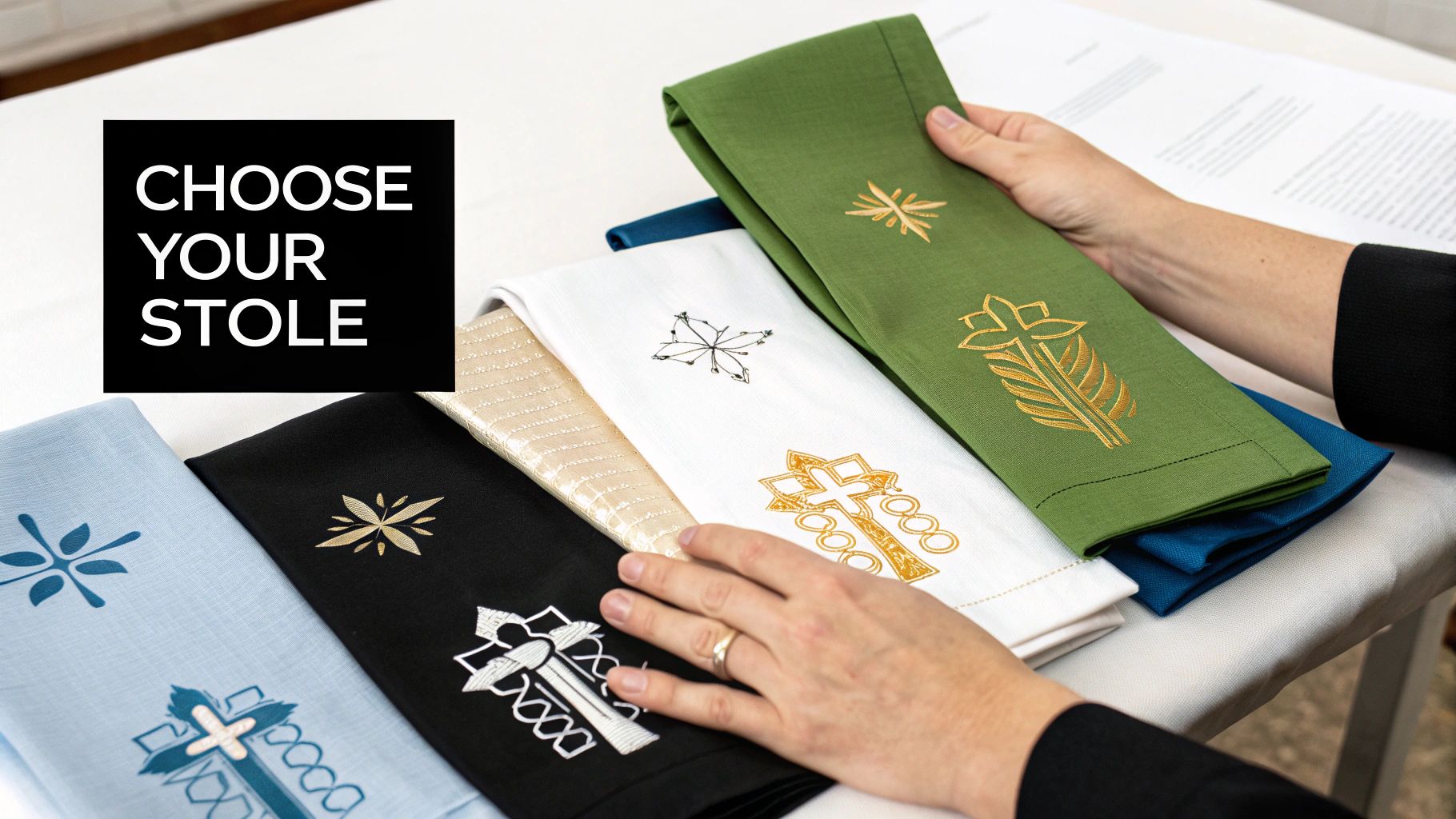
Once you've grasped the incredible history behind stoles for clergy and what the liturgical colors mean, it's time to get practical. The next step is picking a stole that truly fits your ministry, your personal style, and the sacred tasks ahead. This really comes down to three things: the style, the fabric, and the symbols.
Think of it like choosing the right tool for a holy purpose. The cut of the stole determines how it hangs and feels, the fabric dictates its look and longevity, and the symbols it bears communicate a specific, powerful message. When you get these details right, your vestment becomes more than just something you wear—it becomes a meaningful and functional part of your service.
Selecting the Right Stole Style
Clergy stoles generally come in a few core styles, each tailored for a particular liturgical role. The most common cuts you'll see are tapered, straight, and the very distinct deacon style. Knowing the difference is the first move toward finding the perfect fit for your calling.
- Tapered Stole: This is an incredibly popular choice. It's designed to be narrower around the neck and then gradually widens toward the ends. That gentle curve helps it sit comfortably on the shoulders and drape beautifully without any awkward bunching, which is why so many priests and pastors prefer it.
- Straight Stole: Just as it sounds, this style maintains the same width from top to bottom. It has a very classic, traditional feel and provides a larger, more consistent canvas for intricate embroidery or bold designs.
- Deacon Stole: Worn quite differently from the others, the deacon stole is draped over the left shoulder and then secured at the right hip. This unique diagonal placement is a clear visual sign of the deacon's specific role of service within the church.
The choice between a tapered and straight stole often just boils down to personal comfort and what look you prefer. The deacon style, however, is directly tied to the ordained role of a deacon, making it the required choice for anyone serving in that capacity.
Choosing the Best Fabric
The fabric is the soul of the stole. It has a massive impact on its appearance, how it hangs, how it feels, and how well it will hold up over time. Materials can range from time-honored, luxurious options to more modern and practical blends, each with its own character.
Here are some common fabrics you’ll encounter:
- Silk: Often seen as the gold standard, silk has a beautiful natural sheen and a light, airy feel. It drapes like a dream but does require more careful handling.
- Cotton: A wonderfully versatile and breathable choice. High-quality cotton is comfortable, easy to care for, and provides a dignified look without being overly flashy.
- Satin: Known for its glossy, smooth finish, satin is fantastic for making decorative elements pop. It catches the light perfectly, making symbols and embroidery stand right out.
- Blends: Modern cotton/polyester blends really can offer the best of both worlds. They give you the soft feel of cotton plus the durability and wrinkle-resistance of polyester, making them an excellent workhorse for stoles that see regular use.
The material you choose is the foundation of your stole. A durable fabric like a cotton/polyester blend ensures your vestment will withstand frequent use, while a fine silk may be reserved for the highest holy days.
Think about how often you'll be wearing it. For a green stole that will be used all through the long season of Ordinary Time, a sturdy blend is a smart investment. But for that special white stole you only bring out for Christmas and Easter, the unmatched elegance of silk might be exactly what the occasion calls for.
Personalizing with Symbols
This is where a stole truly becomes yours. While the liturgical color sets the tone for the season, the embroidered or appliquéd symbols are what tell a deeper, more specific story. This is the magic that transforms a simple piece of fabric into a powerful statement of faith.
These symbols can be a reflection of your personal calling, a specific sacrament like baptism or communion, or even your church's unique identity. They add a rich layer of meaning that speaks volumes without a single word.
Some of the most common symbols include:
- Crosses: The quintessential symbol of Christianity, representing sacrifice, redemption, and Christ's ultimate victory. Different styles like the Latin, Celtic, or Jerusalem cross each carry their own distinct heritage.
- Dove: A beautiful representation of the Holy Spirit. You'll often see it on red Pentecost stoles or white baptismal stoles, symbolizing divine presence and peace.
- Alpha and Omega: As the first and last letters of the Greek alphabet, these symbols powerfully declare the eternal nature of Christ—"the beginning and the end."
- Chi Rho: This ancient symbol, formed from the first two Greek letters for "Christ," is a classic Christogram and a potent emblem of Jesus.
Just as we specialize in creating meaningful Clergy & Religious Stoles, we know that these symbols are far more than mere decoration. They are a visual sermon, connecting the sacred duties of the wearer to the timeless truths of the faith.
How to Wear and Care for Your Clergy Stole
A beautiful clergy stole isn't just a piece of fabric; it's a sacred symbol and a real investment in your ministry. Knowing how to wear it properly and take good care of it means it will remain a dignified part of your vestments for many years of service.
How you wear a stole is deeply rooted in tradition and visually communicates your specific role during worship.
- For Priests and Bishops: The stole is draped around the back of the neck so it hangs straight down in two parallel lines over the chest. Think of this symmetrical placement as representing the pastoral "yoke of Christ" and priestly authority.
- For Deacons: Deacons wear the stole in a unique diagonal style. It's draped over the left shoulder and then secured at the right hip. This look symbolizes the deacon's role as a servant to the church and the community.
Proper Care and Maintenance for Your Stole
Wearing your stole correctly is half the battle; the other half is keeping it looking its best. With delicate fabrics and what is often very detailed embroidery, stoles for clergy need gentle but consistent care. A well-maintained stole doesn't just look more professional—it honors the sacred tradition it represents.
Always check the manufacturer’s care label first. Materials like silk, cotton, and various polyester blends all have different needs. That said, a few general rules apply to most liturgical vestments.
A clergy stole is a working vestment, but its sacred purpose calls for mindful preservation. Regular, gentle care is an act of stewardship that honors the stole's role in worship and ensures it remains a worthy symbol for years to come.
For routine cleaning, hand-washing in cool water with a mild detergent is usually the safest bet, especially for cotton and more durable blends. You'll want to avoid any harsh wringing or twisting, which can easily stretch the fabric or damage the embroidery. For more delicate materials like silk or for stoles with heavy, intricate embroidery, professional dry cleaning is the way to go.
Storing Your Vestments Correctly
How you store your stole is critical for preventing wrinkles, fading, and other long-term damage. The goal is simple: protect it from dust, light, and creasing.
Here are a few essential storage tips:
- Hang, Don’t Fold: The absolute best way to store a stole is to hang it up. Use a wide, padded hanger to distribute the weight evenly. This helps prevent the fabric from getting those sharp creases or stretching out at the neckline.
- Use a Garment Bag: A breathable garment bag is a fantastic investment. It shields the stole from dust and sunlight, which is notorious for causing colors to fade over time.
- Ensure Proper Airflow: Keep your vestments in a cool, dry place with good air circulation, like a closet. Stay away from damp basements or hot attics where humidity and temperature swings can ruin the fabric.
By following these simple steps for wearing, cleaning, and storing, you can make sure your stoles for clergy stay in pristine condition, ready for every sacred occasion.
Designing Your Custom Clergy Stole with Us
Creating a stole that perfectly captures your calling isn't just about ordering a product; it's a personal journey. We've helped countless students mark their academic achievements, and we bring that same dedication and care to honoring your spiritual milestones with vestments of exceptional quality.
We believe a stole is far more than a simple garment. It’s a visual testament to your service, your faith, and your unique ministry. That's why we’re committed to using beautiful, premium materials and applying our deep understanding of ceremonial vestments to every single piece we create. We make it simple for individual clergy members, entire churches, and seminaries to design and order truly meaningful stoles for clergy.
Our Simple Customization Process
Bringing your vision to life is a straightforward, collaborative process. We'll walk you through everything, starting with the basics like selecting the right fabric, style, and liturgical colors for your specific needs.
From there, we dive into the details that make your stole truly yours—the symbols, text, and overall design that tell your story. This commitment to personalization is at the very heart of what we do. We handle the entire process from start to finish, ensuring the final piece is a worthy symbol of your dedication. You can get started right now by exploring our custom product design page to see how we turn ideas into beautiful, tangible vestments.
For those interested in creative faith expression beyond vestments, many artists and creators explore custom Christian designs on apparel to share their message.
A custom stole is a partnership between your vision and our craftsmanship. It's an opportunity to create a lasting symbol of faith that will serve you and your community for years to come, reflecting the unique path of your spiritual leadership.
Ordering for Your Church or Seminary
Outfitting an entire graduating class or a group of church leaders is just as easy as ordering a single stole. We streamline bulk orders for seminaries and leadership teams, making sure every single vestment maintains the same high standard of quality and consistency. We’re here to support your institution's needs with reliable, attentive service.
Ready to begin? Just reach out to us today to talk about your ideas. Our team is excited to help you craft a beautiful, high-quality clergy stole that honors your sacred calling.
Frequently Asked Questions About Clergy Stoles
Whether you're newly ordained or a seasoned church leader, questions about liturgical vestments are bound to come up. This section tackles some of the most common inquiries we hear about stoles for clergy, giving you clear, straightforward answers.
Our hope is to help you feel confident as you choose, wear, and care for the stoles that will become a key part of your ministry.
What Is the Average Cost of a Quality Clergy Stole?
The price for a well-made clergy stole can vary quite a bit, but you should generally expect to invest between $150 and $300 for a quality, handcrafted piece. Several things influence the final cost.
- Fabric Quality: It's no surprise that luxurious materials like pure silk cost more than durable polyester blends or cotton.
- Intricacy of Design: Stoles featuring complex, custom embroidery or detailed appliqué work require a high level of skill and time, which is reflected in the price.
- Artisan Craftsmanship: A stole from an experienced vestment maker comes with an assurance of quality and incredible attention to detail, which naturally adds to its value.
Think of it as an investment. A well-made stole is designed to last for years, becoming a cherished part of your service and ministry.
Can a Stole Be Given as a Gift for Ordination?
Absolutely! A clergy stole is one of the most meaningful and traditional gifts a new minister can receive for their ordination. It's not just a practical garment for their new role; it’s a powerful symbol of support from their family, mentors, or congregation.
If you're thinking about gifting a stole, it's a good idea to choose a color that sees frequent use.
- A green stole is a fantastic choice, as it's worn during Ordinary Time—the longest season in the liturgical calendar.
- A white stole is another wonderful option. It's used for major celebrations like Christmas and Easter, as well as for baptisms, weddings, and funerals.
- A red stole is a powerful gift, often worn by the clergy person at their own ordination service and again on Pentecost Sunday.
"A stole is more than a vestment; it's a tangible link to a sacred calling. Gifting one for ordination is like offering a blessing that the minister can carry with them throughout their spiritual journey."
Are There Any Traditions Associated with a Priest's First Stole?
Yes, and some of them are truly beautiful. There are several deeply personal traditions connected to a priest's first set of stoles, especially the first purple one used to hear confession.
In some communities, there's a poignant custom where, after hearing his first confession, the new priest gives that very purple stole to his father. This symbolic gift is sometimes buried with the father, serving as a cherished keepsake of his son's sacred ministry.
A similar tradition involves the cloth used to wipe the anointing oil from the new priest's hands at ordination, which is often gifted to his mother. These customs beautifully weave together family love, faith, and the sacred duties of the priesthood.