

You're at the kitchen table with your laptop open, comparing a few personalized graduation stole options, and the temptation is to focus on color first. Don't. The two decisions that protect your ceremony day are whether the stole is allowed and whether it will arrive on time. A custom piece can look perfect online and still fail in the room if your school says no, or if the package shows up after regalia distribution.
A personalized stole is not a new invention dressed up for social media. Personalized graduation stoles belong to an academic-dress tradition stretching back more than 900 years, with Oxford established approximately 1096, Cambridge in 1209, and the University of Coimbra in 1290; Coimbra required Doctors, Bachelors, and Licentiates to wear gowns in 1321, and U.S. institutions adopted the Intercollegiate Code of Academic Costume on March 16, 1895. The point is simple: you're not buying a novelty accessory, you're choosing one more layer of identity inside a very old ceremony. If you keep that in mind, the right question stops being “What looks coolest?” and becomes “What will still be wearable, approved, and readable when I walk across the stage?”
What a Personalized Graduation Stole Actually Means
A personalized graduation stole is the stole that says something specific about you, not just that you graduated. It can carry a name, a year, a flag, Greek letters, cultural symbols, an organization mark, or a heritage design. The common thread is identity, and that's why it sits in the same ceremony space as the gown, cap, cords, and hood rather than outside the regalia system.
The biggest mistake students make is treating all custom stoles as the same thing. They aren't. A flag stole communicates national identity, a custom printed stole can carry names or photos, and a Greek stole or cultural stole carries organization or community meaning. If you don't name the category first, you'll shop by appearance and miss the policy rules that decide whether you can wear it at all.
Start with policy, not artwork
That's the part most seniors underweight. A beautiful stole is useless if the school bans the message, the colors, the logos, or multiple adornments. Some schools permit only approved items, some allow cultural or affinity stoles, and some require prior approval for university marks or seals.
Practical rule: if you can't say exactly why the stole is permitted, you're not ready to order it.
The right mental model is a pre-flight check, not a style browse. First confirm the institution's rules, then define the category, then decide whether you want embroidery, print, a flag layout, or an honor-style presentation. If you want a deeper example of how custom regalia gets built around ceremony norms, the customized cap and gown guide is a useful comparison point for thinking about fit, approval, and presentation.
Customization Options That Shape the Final Stole
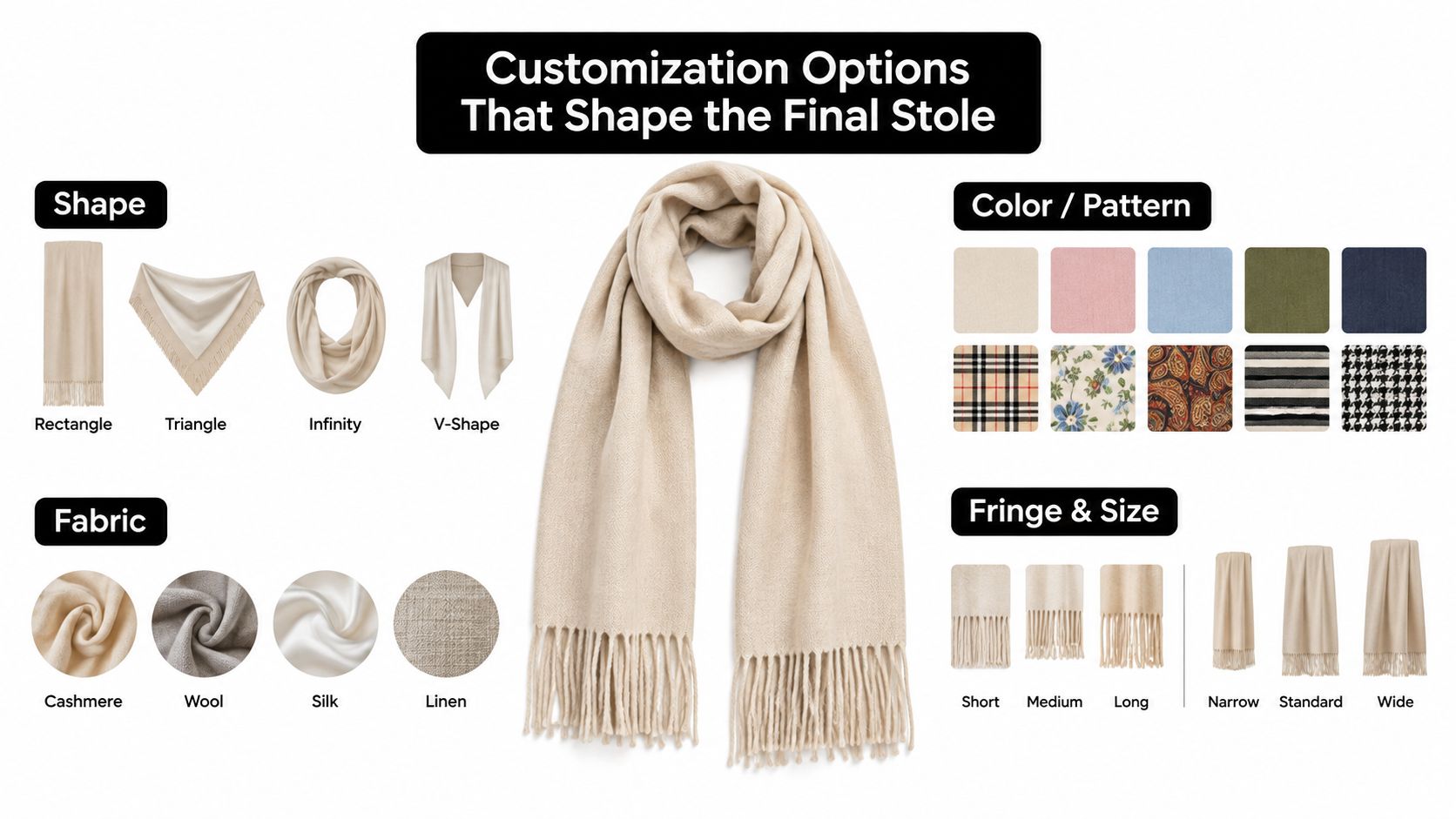
The first real decision is decoration method. Embroidery gives a stitched, tactile look. Print gives you flexibility for photos, gradients, and sharper full-color art. Don't choose the method first because it seems familiar, choose it because it matches the artwork you want on the stole.
Match the method to the fabric
Dense embroidery on a thin satin base can pucker. Heat-sensitive finishes can discolor under the wrong print process. That's why the fabric and the decoration system need to work together from the start, not be forced together at the end. If you're ordering from a vendor that handles proofs, ask how the sample is made, what thread or ink system they're using, and how the result will sit under stage lighting.
Lettering is where amateur designs fall apart. Names and dates should read cleanly at a distance, not just look sharp on a laptop screen. Keep the text high-contrast and spaced well enough that it stays legible against the gown. If your logo or artwork turns muddy when scaled down, the file is too complex for a narrow stole panel.
Don't overload the fabric. A stole has to survive movement, a handshake line, and a thousand camera phones. Clear wins over crowded every time.
For a design mindset that translates well to regalia, the guide to bridal robe personalisation is a surprisingly relevant reference, because it treats personalization as a balance of surface, message, and wearability instead of just decoration.
Use the proofing workflow seriously
A reliable production process uses a first-article approval before the run is made, then checks the bulk lot for wash durability, measurement tolerance, decoration position, thread trimming, and folding consistency. The point isn't bureaucracy. It's catching the exact failures that ruin custom pieces: crooked placement, tiny lettering, or embroidery that looks too dense once stitched.
If you're comparing customization paths, the most useful parallel is a graduation stole embroidery setup, because embroidery shows why balance, placement, and fabric choice matter more than the idea on paper. In practice, the cleanest designs are usually the ones with the fewest competing elements.
Color and Material Choices With Real Symbolism
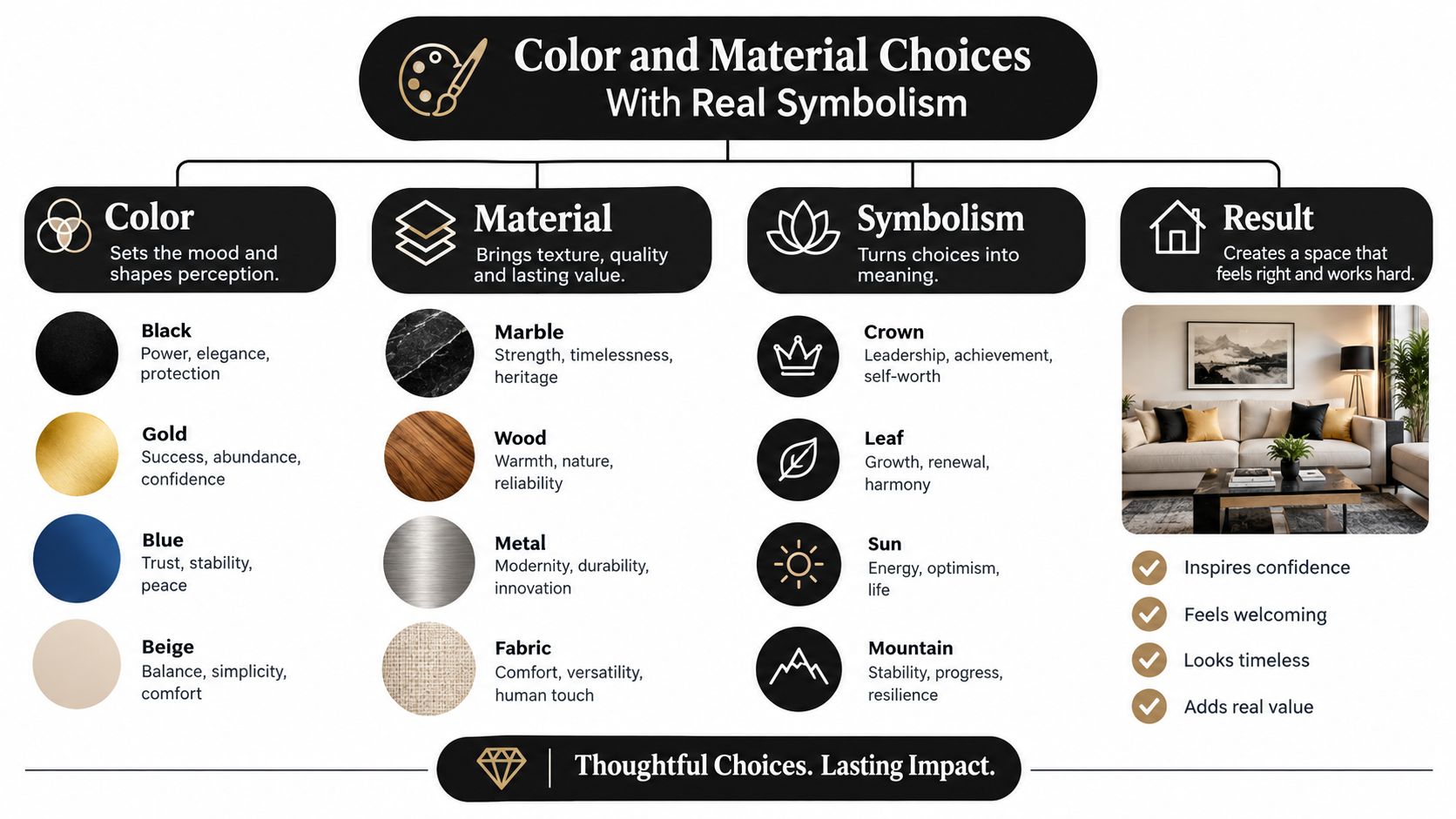
Color only works when the school recognizes it. That's the rule. A gold stole might signal honor in one setting, heritage in another, and a restricted color in a third. The same is true for honor cords, because academic color meaning is local, not universal.
Seattle Colleges shows how quickly this can vary inside one system. It assigns gold honor cords for cumulative GPAs of 3.5 or higher at its North and South campuses, but sets the threshold at 3.8 or higher at its Central campus. Utah State University's guidelines list cum laude as a 3.50–3.79 GPA with a navy cord, while reserving solid gold, silver, and navy cords for Latin honors. That's the practical lesson, the school controls the meaning, not the vendor. Seattle Colleges' academic regalia chart makes that point plainly.
Pick symbolism that the ceremony will actually allow
There are three common jobs a personalized stole can do. It can reflect institutional identity, like school colors or program recognition. It can reflect academic distinction, if your campus allows honor-style adornment. Or it can reflect personal identity, such as a cultural, religious, Greek, or national symbol.
That's why the safest move is to confirm the approved color family before you fall in love with the design. If your school reserves certain colors for honors, your custom version should not imitate them unless you've earned and been granted that distinction. Otherwise, you're creating a ceremony problem for yourself and everyone who has to police regalia on stage.
Choose fabric for how it behaves in light and storage
Satin and matte finishes don't just look different, they read differently on camera and age differently in storage. A satin surface catches light and gives a more formal shine. A matte surface softens glare and can make embroidery or print easier to read in photos. For keepsake value, think about how the material will fold, crease, and hold color over time, not just how it looks on the hanger.
If you want a useful color-reference point before you order, the graduation stole colors meaning guide is a straightforward way to compare symbolic color use without pretending every campus follows the same code.
Embroidered Versus Printed Stoles Compared
Embroidery and print solve different problems. Don't treat them like interchangeable finishes. Embroidery is stronger when you need texture, structure, and a formal look. Print is better when you need visual detail, full-color elements, or artwork that would turn muddy if stitched.
| Factor | Embroidered | Printed |
|---|---|---|
| Visual style | Raised, stitched, formal | Flat, graphic, full-color capable |
| Best artwork | Monograms, names, simple crests, Greek letters | Photos, gradients, detailed logos, complex art |
| Fabric fit | Better on sturdier materials | Better for designs that need flexibility |
| Readability | Strong for bold text | Strong when color contrast is high |
| Risk | Can pucker on thin fabric if dense | Can discolor if the fabric or heat process is mismatched |
| Keepsake feel | More tactile and traditional | More versatile for detailed storytelling |
Use embroidery when the message is compact and dignified. Use print when the design has too much nuance to survive stitches. That's the cleanest rule, and it saves you from trying to force a photo, crest, and long slogan onto one narrow strip of fabric.
Practical rule: if you need to squint at the artwork on your screen, it will probably be worse on a stole.
If you want to compare embroidery styles before choosing, browse embroidery personalization styles for a sense of how thread, density, and placement change the final look. And if you're weighing the operational side of stitched personalization, the graduation stole embroidery reference is the better model for thinking about layout on a narrow ceremonial garment.
The honest verdict is this. Embroidery wins on prestige and structure. Printing wins on complexity and speed. Pick the one that serves the art, not the one that sounds more premium in the abstract.
Ordering Timeline and Approval Workflow
Most students lose the ceremony here. A personalized stole is not a same-week impulse buy. It's a deadline-driven item, and the deadlines are set by the school, not by your excitement.
The first milestone is policy verification. Check whether the institution allows custom stoles at all, whether multiple stoles are permitted, and whether logos, seals, or school names need prior approval. That matters because some campuses are strict about messaging, while others allow heritage or identity pieces but still want a mock-up before anything is worn publicly.
The next step is artwork approval. Send the design early enough for revisions, because the version you like on a screen may fail once the school reviews color, wording, or placement. Then give the production window enough time to absorb shipping, inspection, and a second round of correction if needed.
A useful example of the logistical side comes from the University of Iowa, which says all regalia must be in hand before commencement and won't be sold or rented at the ceremony. George Washington University also stopped accepting online regalia orders for its 2025 ceremonies after a cutoff date and directed students to in-person purchasing. Park University's 2025 handbook ties regalia distribution to accessibility planning, which is exactly what you want to hear if you need seating or stage support arranged in advance. The University of Iowa's commencement regalia guidance is a blunt reminder that timing is not optional.

Order like the ceremony depends on it
Because it does. Build the schedule backward from the date you have to walk. Approval comes first, production comes second, shipping comes third, and inspection happens the day the package arrives. Photograph the full outfit once you have it, because cords, medals, hood, and stole can all compete visually.
If you're shopping through a vendor that offers mockups and production support, Stoles.com® provides customizable graduation and ceremonial stoles, including flag stoles, honor stoles, Greek stoles, and custom graduation stoles. Use that kind of service only after you've checked the institution's rules, because no vendor can override a campus policy once commencement staff reviews you at the venue.
The best order is the one that arrives boringly early. That's what protects your ceremony.
Wearing, Caring For, and Styling Your Stole
The stole should sit cleanly over the gown, not fight it. Lay it flat before you step out, make sure both ends drop evenly, and check that nothing twists behind the neck seam. If you're wearing cords or medals, put the stole on last enough to adjust the look, but early enough to see whether the layers tangle.
Northeastern State University of Oklahoma says stoles must not exceed 4 inches in width or 66 inches in total length, which is a good reminder that size matters as much as design. Some schools also vary on whether multiple stoles are allowed and whether university names, logos, or seals require prior approval, as seen in the approval approach used at Capitol Technology University. The practical takeaway is simple, don't assume your stole is automatically acceptable just because it fits your shoulders. NSU Oklahoma's commencement dress guidelines are the kind of policy page you should check before the ceremony week starts.
Keep it readable in photos
The stole has to survive more than the stage crossing. It has to read clearly in the portrait, at the reception, and in the family photos your relatives will keep forever. That means avoiding heavy wrinkling, keeping embroidery or print away from abrasion, and storing it flat away from direct sunlight after the event.
For photo inspiration, see recent senior sessions to understand how clean lines, contrast, and body posture change the way regalia reads in front of a camera. A personalized stole works best when it's visible without being loud. If the design needs constant fixing, it's too complicated.
Care matters too. Spot clean only when needed, steam gently instead of pressing hard, and keep the stole folded without crushing stitched or printed areas. That preserves the piece as a keepsake instead of turning it into a wrinkled memory.
If you want a personalized graduation stole that looks right on stage and still fits your school's rules, start with a piece built for ceremony, not just decoration. Stoles.com® offers customizable graduation and ceremonial stoles, including flag stoles, honor stoles, Greek stoles, and custom graduation stoles for identity, achievement, and affiliation. Visit Stoles.com® to review options, compare styles, and choose a stole that is fully prepared for commencement day.