

Graduation sash embroidery is the art of stitching custom designs, names, and achievements directly onto a graduation stole. It transforms the sash from a simple accessory into a premium, textured keepsake. Unlike printing, which just puts ink on the surface, embroidery uses thread to create a design that’s raised, durable, and adds a real touch of class to your graduation outfit.
The Enduring Value of an Embroidered Graduation Stole
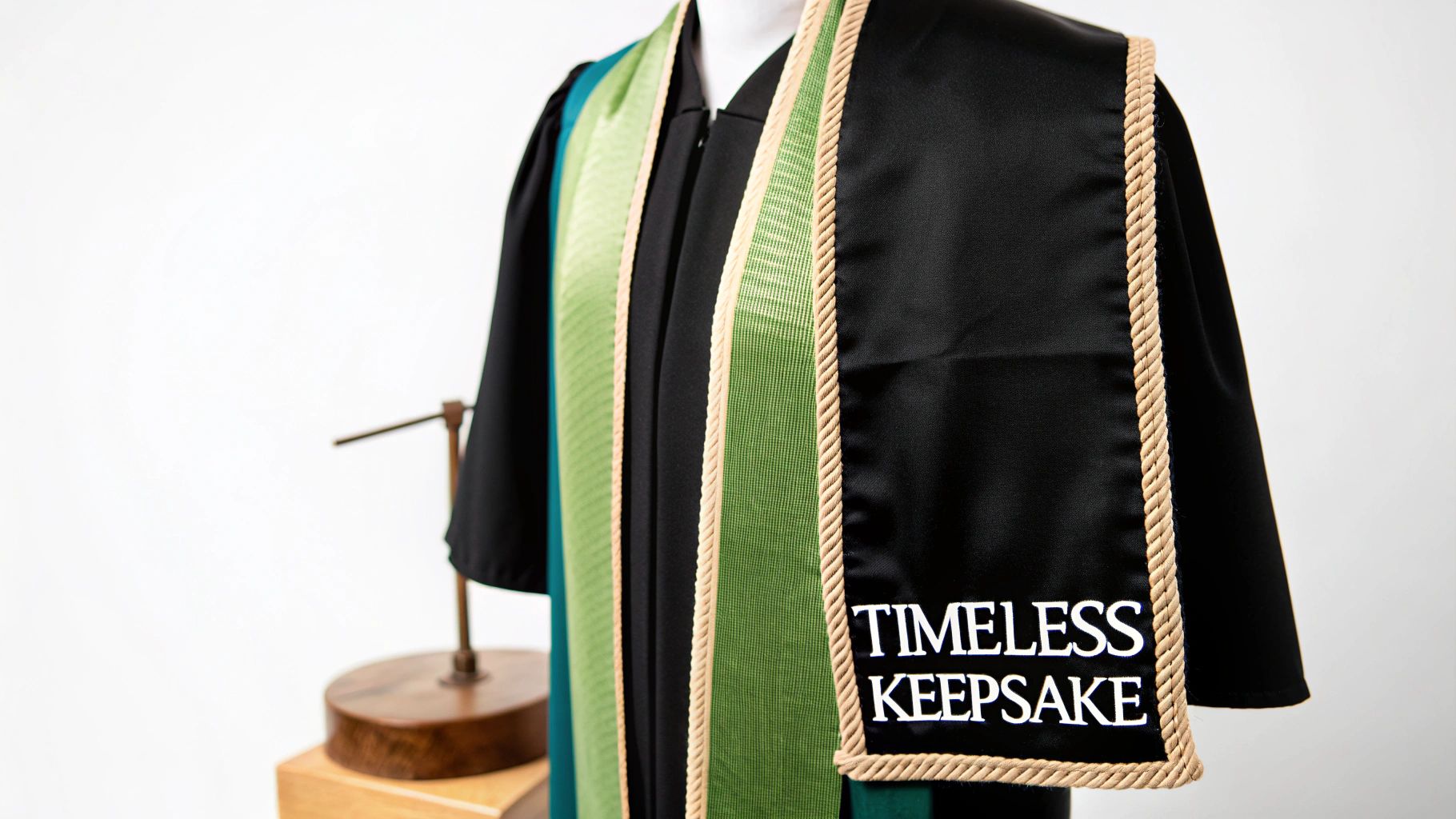
Graduation day is a huge milestone. It’s the finish line after years of hard work, late nights, and personal growth. Your diploma is the official certificate, but a custom graduation sash tells your personal story. Embroidery takes that story and gives it weight, turning a piece of fabric into a symbol of pride you can hold onto forever.
Think of it like the difference between a photograph and a sculpture. A printed design is flat, like a photo—it captures the image, but that's it. Embroidery is more like a sculpture. It has real texture, dimension, and a substantial feel that just screams quality and permanence. The detailed stitches catch the light, making your name, degree, or school crest pop with a classic, professional finish on your graduation stole.
Why Embroidery is the Gold Standard
For centuries, embroidery has been a mark of quality and distinction, and that tradition continues with graduation stoles and honor cords. The reasons it’s considered the best choice are pretty clear:
- Durability and Longevity: The threads are stitched right into the fabric, so the design will never crack, peel, or fade. Decades from now, your graduation stole will look just as vibrant as it did on graduation day.
- Tactile and Visual Appeal: The raised texture of embroidery gives it a sophisticated, three-dimensional quality that printed designs just can’t match. It looks and feels high-end.
- Perceived Value: Anyone can see that an embroidered item is a high-quality product. It reflects the importance of the achievement it represents.
This love for personalization is part of a much bigger trend. The global embroidery market is worth billions and is expected to keep growing. A huge part of that demand comes from people ordering custom items like graduation stoles and sashes online.
An embroidered graduation sash is more than just an accessory for a day; it's a timeless keepsake. It serves as a physical reminder of your academic journey, ready to be displayed in a frame or carefully stored as a treasured heirloom.
Investing in a Lasting Memory
Choosing graduation sash embroidery means you’re investing in preserving your memories with the elegance they deserve. As you get ready to walk across that stage, a beautifully embroidered stole makes sure your accomplishments are displayed with distinction.
When you work with a trusted provider like Stoles.com®, you're not just buying a product; you're commissioning a piece of your personal history, crafted to celebrate your success for years to come. This guide will walk you through everything you need to know to create the perfect embroidered stole for your special day.
Choosing Your Sash Fabric and Color Palette
The foundation of any incredible piece of graduation sash embroidery is, of course, the sash itself. Think of the fabric as the canvas for your big statement—the right one makes all the difference in how your final design looks and feels.
For graduation stoles, satin is the undisputed champion, and for very good reason. Its smooth, tightly woven surface is the perfect base for an embroidery needle to do its work. The subtle sheen of satin also catches the light beautifully, creating a rich backdrop that makes your embroidered thread colors truly pop. This is how you get that elegant, crisp display for your name, degree, and achievements.
Why Fabric Choice Is So Important for Embroidery
Imagine trying to paint on a bumpy, uneven wall versus a smooth, primed canvas. It's almost impossible to get clean lines on the rough surface, right? The same logic applies directly to embroidery on graduation sashes.
- Satin’s Smooth Surface: This allows for incredibly precise and crisp stitches, which is exactly what you need to define letters and logos clearly.
- Fabric Strength: A quality satin weave is strong enough to handle dense stitch counts without puckering or warping—a must-have for more detailed designs.
- A Vibrant Display: The natural luster of the fabric boosts the vibrancy of the thread colors, giving you a final product that looks professional and feels premium.
While other materials are out there, satin consistently gives the best results for ceremonial wear like a graduation stole. It perfectly balances durability with that classic, celebratory look you want on graduation day.
Telling Your Story with Color
Picking the colors for your stole is about so much more than just what looks good; it’s a way to tell your story. Your color palette can represent your school, your specific field of study, or even a personal part of your identity. Many universities have specific color combinations that signify different academic disciplines, a tradition that adds another layer of meaning to your regalia.
For example, a light blue stole often represents a degree in education, while engineering grads might wear orange. These established color codes connect you to a long history of academic tradition. You can explore our huge selection of custom graduation stoles to find the perfect shade to represent your own unique journey.
A well-chosen color scheme does more than just look good—it communicates your academic identity at a glance. It connects your personal achievement to a broader community of scholars in your field.
Making Sure Your Design Has Maximum Impact
The last piece of this puzzle is contrast. Your goal is for every detail on your sash to be easily readable from a distance, whether you’re walking across the stage or snapping photos with proud family members. High contrast is the secret to making your graduation sash embroidery stand out.
Here are a few practical tips for picking a high-impact color combination:
- Dark on Light: A dark thread color like navy blue, black, or forest green on a light-colored sash (think white, silver, or gold) is a timeless choice that’s always easy to read.
- Light on Dark: On the flip side, using metallic gold, silver, or white thread on a dark sash (like black, royal blue, or maroon) creates a bold, striking effect.
- Avoid Low Contrast: Be careful about pairing similar colors, like light blue thread on a royal blue sash. This can make the embroidery very hard to see, causing all those important details to get lost.
By thinking carefully about your sash fabric and building a smart color palette, you create a solid foundation. This ensures your custom embroidery isn't just beautiful up close but also makes a proud, clear statement from anywhere in the graduation hall.
Understanding the Craft of Sash Embroidery
To really appreciate a custom embroidered graduation stole, you have to look closer at the skill and artistry that goes into it. Think of high-quality graduation sash embroidery as a perfect recipe with three key ingredients: the thread that brings the design to life, the stitches that form the shapes, and the stabilizer that provides a hidden structure.
It’s a bit like building a masterpiece from the ground up. The thread is your paint, the stitches are your brushstrokes, and the stabilizer is the perfectly prepped canvas that makes sure the final piece is flawless. Getting these components right is what separates a professional, lasting keepsake from just another accessory.
The Foundation: The Thread
The thread is the star of the show—it’s what everyone sees. But not all threads are created equal. The two most popular choices for graduation sashes each offer something different, affecting both the look and the longevity of your stole.
- Rayon Thread: This one is known for its brilliant, high-sheen finish. Rayon has a silky texture that catches the light beautifully, making it an amazing choice for a vibrant, luxurious look that really pops on satin.
- Polyester Thread: Meet the workhorse of the embroidery world. Polyester is incredibly strong, colorfast, and resistant to things like bleach and fading. That makes it exceptionally durable for a keepsake you’ll want to treasure for years to come.
While rayon has a slightly superior sheen, modern polyester threads have come a long way, offering a beautiful finish with the bonus of added strength. Part of the craft is choosing the right thread for embroidery machines to match the project's needs.
The Artistry: The Stitches
Just like a painter uses different brushstrokes for texture and detail, an embroidery artist uses various stitch types to build a design. Each stitch has a specific job, and the way they're combined is what creates the detailed final product on your sash.
The two fundamental stitches you’ll see on most graduation stoles are the Satin Stitch and the Fill Stitch.
The magic of embroidery lies in turning a flat design into a textured, three-dimensional reality. The stitch type is the primary tool for this transformation, defining the look and feel of every single element on your stole.
The Satin Stitch is made up of a series of straight, parallel stitches that lie flat against the fabric. This technique is perfect for outlining shapes and creating crisp, clean lettering for things like your name, degree, or graduation year. Its smooth, sleek appearance gives text a bold and easy-to-read finish.
On the other hand, the Fill Stitch is used for coloring in larger areas, like a school crest, a custom logo, or a flag. These are smaller, denser stitches that run in different directions to create a solid field of color and texture. When a fill stitch is done right, it results in a robust, professional-looking emblem with no gaps.
This infographic breaks down the core elements that make a graduation sash stand out.
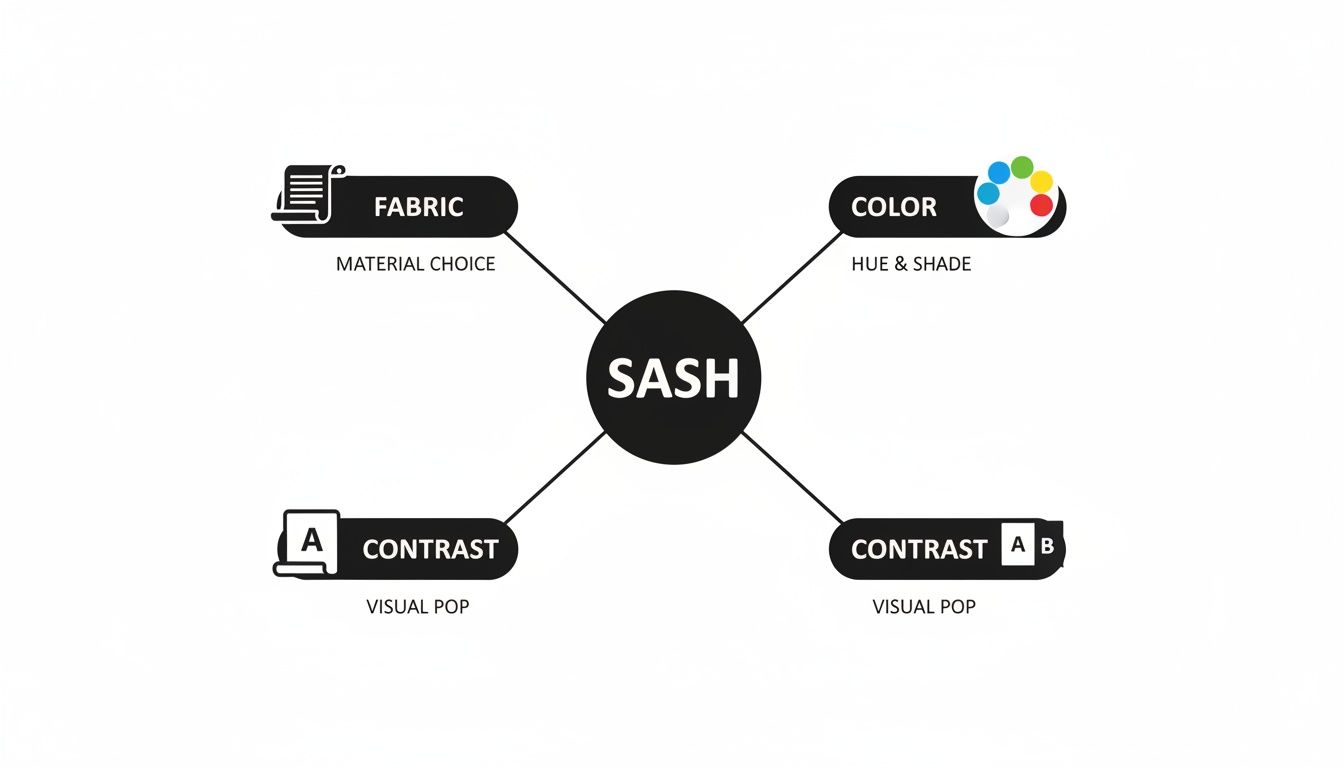
This visual shows how fabric, color, and contrast work together to create the perfect canvas for stunning embroidery.
The Hidden Hero: The Stabilizer
Now for the unsung hero of graduation sash embroidery: the stabilizer. This is a special piece of material placed behind the area being embroidered. Its job is to give the sash fabric essential support and structure while the machine is stitching away.
Imagine trying to write on a flimsy piece of tissue paper—it would tear and bunch up under the pressure of the pen. The stabilizer acts like a clipboard, holding the fabric taut and preventing all sorts of common embroidery problems.
Without a good stabilizer, the constant pull of thousands of stitches would cause the satin fabric to pucker, warp, and completely distort the design. It's the hidden foundation that ensures your embroidery comes out flat, crisp, and professional. Once the embroidery is finished, the excess stabilizer is carefully trimmed away, leaving only the beautiful, stable design behind. Knowing about this hidden component helps you appreciate the true craftsmanship that goes into a flawless custom stole.
How to Design Your Custom Graduation Stole
Now for the fun part! This is where you get to bring your story to life. Designing your graduation stole is all about weaving your personal journey and academic wins into a single, beautiful piece.
The goal is to strike that perfect balance between self-expression and a polished, professional look. It’s a mix of choosing the right fonts, deciding where to put everything, and making sure it’s all sized correctly to create something you’ll be proud to wear.
Choosing Your Typography
Think of the font as the voice of your stole. It does so much more than just spell out words; it sets the entire vibe. The right typography can make your sash feel classic, modern, elegant, or bold.
If you’re thinking of adding text like your name, initials, or graduation year, it helps to understand how letters are formed with thread. Looking into the basics of how to embroider a name by hand can give you a great feel for what works best.
To help you decide, here’s a quick look at some common font styles and where they shine.
Embroidery Font Style and Best Use Cases
| Font Style | Characteristics | Best For |
|---|---|---|
| Serif | Has small decorative lines (serifs) at the ends of strokes. | A classic, traditional, and formal look. Think "Summa Cum Laude." |
| Sans-Serif | Lacks serifs, offering a clean, modern, and bold look. | Your name, graduation year, or a modern degree like "Computer Science." |
| Script | Mimics cursive handwriting for an elegant, personal touch. | A single initial, a short quote, or adding a touch of flair. |
| Block | Features thick, heavy lettering for a strong, athletic feel. | School abbreviations, Greek letters, or team affiliations. |
For instance, a classic serif font like Times New Roman has that timeless, academic feel, making it a perfect match for honors like "Magna Cum Laude." On the other hand, a clean sans-serif like Arial gives you a modern, easy-to-read look that’s great for your name and graduation year.
The Art of Placement and Balance
Once you’ve got your fonts picked out, it's time to figure out where everything goes. A well-balanced design is key to making your stole look sharp, not sloppy. Think of the two sides of the stole hanging down your front as two separate canvases that need to work together.
A simple and effective layout is to give each side its own theme. This keeps things looking clean, organized, and easy for everyone to read as you walk by.
- Left Panel: This side is often for your academic or organizational identity. It's the perfect spot for your school's crest, fraternity/sorority letters, or an honor society logo.
- Right Panel: This side is usually all about you. It’s ideal for personal details like your name, graduation year, degree (e.g., "B.S. in Nursing"), or a special title you held.
The key to great design is visual hierarchy. Decide which element is the most important—be it your name, your degree, or a specific symbol—and give it the most prominent placement and size.
This approach ensures neither side looks too cluttered or too empty. And don't forget, your stole is just one part of your graduation look. Thinking about how it will complement your cap and gown is essential. For more tips on pulling it all together, check out our guide on creating a customized cap and gown.
Getting the Sizing Just Right
The last piece of the design puzzle is sizing. You want your graduation sash embroidery to be big enough to be seen from a distance but not so big that it looks clunky. It's all about finding that sweet spot between impact and elegance.
A good rule of thumb is to make text like your name or degree between 1.5 to 2.5 inches tall. This size is bold enough to pop in photos and be legible from across the stage. For logos or crests, aiming for 3 to 4 inches in diameter usually works best, as it allows for plenty of detail without taking over the whole stole.
Ultimately, designing your stole is about crafting a keepsake that celebrates your unique journey. By being thoughtful about your fonts, placement, and sizing, you’ll create something meaningful that’s ready to be brought to life.
Placing Your Order for an Embroidered Stole
Okay, you've perfected your design, and now you’re ready to bring it to life. Ordering a custom graduation sash embroidery can feel a bit technical at first, but it’s really just about getting your great idea from the screen onto the stole. Let's walk through the process we use here at Stoles.com® to show you how simple it is to turn your vision into a keepsake you'll treasure.
The very first step—and honestly, the most important one—is getting us your design in the right file format. This isn’t just a fussy detail; it’s what allows our embroidery machines to perfectly recreate your artwork. Think of it like giving the machine a super-precise, stitch-by-stitch map to follow.
The Language of Embroidery Machines
Embroidery machines don’t look at JPEGs or PNGs the same way a printer does. They need a special kind of file that tells them exactly where to put every single stitch. The two best formats for this are vector files and native embroidery files.
- Vector Files (.AI, .EPS, .SVG): If you have a custom logo, a school crest, or any other complex graphic, a vector file is the gold standard. Unlike regular images made of pixels (like a photo), vectors are built with mathematical paths. This means we can scale them up or down to any size, and they will always stay perfectly sharp and clean.
- Embroidery Files (.DST, .PES): These are the files our machines read directly. A .DST (Data Stitch Tajima) file is one of the most common formats out there. It's basically a digital blueprint telling the machine exactly where to stitch, what color thread to use, and when to make a cut.
Sending the right file from the get-go saves a ton of time and is the key to getting that crisp, professional look you want for your stole.
From Digital Design to Stitched Reality
Once we have your file, your design officially enters our production pipeline. It's a journey from a digital concept to a physical, embroidered stole, and every stage requires a lot of care. Knowing how it works helps you know exactly when to expect your order.
First up is digitization. This is where a skilled technician manually converts your vector file into a stitch file (like that .DST we talked about). They meticulously map out every detail, deciding which stitch types to use—satin stitches for clean lettering, fill stitches for solid logos—to build a "stitch map." It's a mix of art and science, because a great digitization is absolutely essential for a professional finish. A rush job can lead to puckered fabric or sloppy details, which is why having experts handle this part is so crucial.
The digitization process is the single most important step in ensuring quality. It’s the bridge between your creative vision and the physical embroidery, translating a flat image into a textured, three-dimensional design.
After your design is digitized, we load the file into the embroidery machine. Your satin stole gets hooped up with a stabilizer backing, and the machine gets to work, stitching your design with precision. Once the embroidery is complete, we unhoop the stole, trim away the extra stabilizer, and give it a final quality check before packing it up for shipping. Typically, this whole process takes about 2-4 weeks, though times can change depending on how complex your design is and how many orders are in the queue. For other options, our guide on finding graduation stole embroidery near me is a great resource.
Understanding the Cost of Your Custom Stole
So, what goes into the price of custom graduation sash embroidery? It mostly comes down to one thing: stitch count. This is simply the total number of stitches needed to create your design.
Here’s what influences that number and the final cost:
- Design Complexity: A simple name and graduation year will have a low stitch count. A detailed university crest with lots of colors and intricate shapes? That will have a much higher stitch count.
- Design Size: Bigger designs naturally need more stitches to cover the area. The larger the design, the higher the stitch count and the cost.
- Digitization Fee: For new custom logos that we've never stitched before, there's usually a one-time setup fee. This covers the expert's time to create that perfect stitch file. This fee doesn't apply if you're reordering or just want standard text.
- Quantity: Ordering for a whole group or school? We often offer bulk pricing, which brings the cost per stole way down.
When you see the price, you're not just paying for thread. You're investing in the skilled digitization work, the machine time, and the quality materials needed to create a beautiful memento of your achievement that will last a lifetime.
Preserving Your Embroidered Keepsake for Years
Your graduation sash is so much more than just a piece of satin for the ceremony; it's a real, tangible piece of your academic history. To make sure this precious keepsake stays in perfect condition for decades, you'll want to give it the right care.
Treating your stole with care starts the second you take it off. It might be tempting to just toss it in the laundry with everything else, but that’s the fastest way to ruin the delicate graduation sash embroidery. Those intricate threads can easily snag, pull, or completely unravel in a washing machine.
Gentle Cleaning and Pressing
The best way to clean your sash is always gentle spot-cleaning. If you happen to get a small smudge or spill on it, just use a clean, damp cloth with a tiny drop of mild soap. Dab the spot softly—never rub it hard, as that can mess up both the satin fabric and the embroidery.
If your stole is just wrinkled from being packed away, you'll need to iron it very carefully. Never, ever place a hot iron directly on the embroidery. The heat can melt or flatten the threads, ruining their beautiful texture and shine.
The golden rule for ironing an embroidered stole is to create a barrier. Always use a pressing cloth—a clean piece of cotton fabric, like a tea towel—between the iron and the sash to protect the delicate stitching.
Here’s the safest method to press your sash:
- Use Low Heat: Set your iron to the lowest heat setting you have, the one you'd use for satin or other delicate fabrics.
- Press from the Back: Whenever you can, flip the stole over and iron it on the reverse side. This keeps the direct heat off the embroidery.
- Use a Pressing Cloth: Place your pressing cloth over the area you're ironing. This helps spread the heat evenly and gives the threads an extra layer of protection.
Long-Term Storage Solutions
Proper storage is the final piece of the puzzle. Just shoving it into a drawer or hanging it in a closet can lead to permanent creases, fading, and a layer of dust over time. You want to store it in a way that shields it from the elements.
Avoid plastic bags at all costs. They can trap moisture, which might lead to mildew. A much better approach is to wrap it loosely in acid-free tissue paper and store it flat inside a keepsake box. This prevents deep creases and protects it from light and dust.
Of course, an even better option is to put it on display! For some great ideas on how to showcase your entire graduation outfit, check out our guide on creating a graduation gown frame. It’s a fantastic way to turn your regalia into a beautiful piece of decor.
Your Top Graduation Sash Embroidery Questions Answered
As you get closer to graduation, you probably have a few questions about getting your custom sash just right. We get it. Students, parents, and school coordinators often ask us about the finer details. To make things easy, we’ve put together answers to the most common questions we hear.
Think of this as your go-to guide for all things embroidery. Getting these details sorted out now means a smooth, stress-free process, so you can focus on what really matters—celebrating this huge milestone.
How Long Does Graduation Sash Embroidery Take?
One of the first things people ask is, "How long will this take?" From the moment you place your order to when it arrives at your door, you can generally expect a turnaround time of 2 to 4 weeks. This gives our team enough time to properly digitize your design, stitch it with precision, and run it through quality checks.
A few things can affect that timeline:
- Design Complexity: A simple name and graduation year is a quick job. A detailed school crest with lots of colors? That’s going to take a bit more time on the machine.
- Order Size: A single, personal stole is usually faster than a bulk order for an entire graduating class or student organization.
- Time of Year: Things get really busy during the spring graduation rush. Production times can stretch a little longer due to the high volume of orders.
The best advice we can give? Order your stole well before your graduation date. It’s the easiest way to avoid any last-minute stress and ensure it arrives with plenty of time to spare.
Embroidery Versus Screen Printing
What's the real difference between embroidery and screen printing on a sash? While they’re both ways to customize your stole, the final look and feel are worlds apart.
Embroidery is all about stitching a design directly into the fabric with thread. This creates a rich, textured effect that you can see and feel. It has a classic, high-end look that’s made to last a lifetime, turning your stole into a true keepsake.
Screen printing, on the other hand, involves applying ink on top of the fabric. While it’s good for complex, photorealistic images, the ink just sits on the surface. Over time, it can crack or fade. For something as important as a graduation stole, embroidery is the superior choice for its durability and timeless elegance.
Using an Official School Logo
Of course! Using your official school logo is a popular way to personalize your stole. To make it happen, we’ll need a high-quality vector file of the logo (formats like .AI, .EPS, or .SVG work best). Our embroidery specialists use this file to create a digital stitch map in a process called digitization.
You might see a one-time digitization fee for new logos. This covers the expert work of converting your design into a precise, stitch-by-stitch file that our machines can read. Also, just be sure you have permission to use any trademarked school logos before submitting your order.
How Is the Cost of Embroidery Calculated?
The price of your graduation sash embroidery really comes down to one thing: the stitch count. This is simply the total number of stitches needed to bring your design to life. The more stitches required, the more time and thread it takes, which is reflected in the cost.
The biggest factors that drive up the stitch count are the size and complexity of your design. A large, solid-filled logo will naturally cost more than a few lines of simple text. The number of thread colors can also play a role. If you’re ordering for a group, we often provide bulk discounts that can bring the price per stole down significantly.
Ready to design a stole that celebrates your hard work? At Stoles.com®, we’re experts in creating beautiful, custom embroidered graduation stoles that you’ll be proud to wear and keep forever. Check out our options and start designing your perfect stole today at https://www.stoles.com.