

A black graduation stole, especially one made of Kente cloth, is so much more than just an accessory for your commencement ceremony. It's a powerful symbol of your heritage, your resilience, and the personal triumph of reaching this incredible milestone.
This stole transforms the standard academic regalia into a deeply personal story, celebrating not just what you've learned, but who you are and where you come from.
Unpacking the Symbolism of Black Graduation Stoles
Graduation is a huge deal—it's the finish line of a long, personal journey. While the cap and gown are universal symbols of scholarly success, adding a black graduation stole brings a profound layer of meaning, particularly within the Black community. It’s a visual declaration of pride, tying your individual achievement to a much broader historical and cultural story.
Choosing to wear one isn’t just a style choice; it’s a deliberate act of honoring your roots and the community that supported you every step of the way. For many graduates, it represents overcoming systemic barriers and celebrates the collective strength that helped make their success possible.
A Connection to Heritage and Achievement
The tradition of wearing cultural regalia like black graduation stoles has exploded in popularity, becoming a standout feature at commencements all across the country. These graduation sashes, especially the vibrant Kente cloth designs, are absolutely packed with historical significance. Originating with the Akan people of Ghana, Kente cloth has been a cornerstone of important ceremonies for centuries.
Every color woven into the fabric has its own story. For instance, black often represents maturation and the presence of ancestors, while gold can symbolize royalty and wealth. By wearing a Kente stole, you're literally draping yourself in a story of legacy and honor. You can dive deeper into the rich tapestry of graduation stole meanings in our detailed guide.
The use of these stoles has really taken off over the last three decades. As institutions and student groups have pushed for more formal recognition, it’s become a powerful movement highlighting the need for representation and the celebration of diverse identities in academic spaces.
These stoles beautifully bridge the past and the present. They allow you to carry your heritage with you as you walk across that stage and into your future. It's a powerful statement that your academic success and your cultural identity are completely intertwined, making the whole ceremony a much more personal and meaningful experience. Learn more about the rise of Kente stoles at graduation on funtimesmagazine.com.
Decoding the Language of Kente Cloth
Every thread woven into a Kente stole tells a story. It's so much more than a beautiful accessory for your graduation gown; this iconic garment is a rich tapestry of symbolism, carrying centuries of Ghanaian history from the Akan people straight to its modern-day significance for the African diaspora.
Learning about a Kente stole is like learning a new visual language. The colors and patterns all work together to communicate powerful ideas about life, values, and community.
Historically, Kente cloth was reserved for royalty and the most special occasions in Ghana. It's easy to see why it has become one of the most recognizable symbols of Black pride and achievement. Each intricate design is crafted with intention, making it the perfect emblem for a milestone as huge as graduation. It’s a powerful, visible way for graduates to connect with a legacy of strength and excellence.
The Meaning Behind the Colors
The vibrant colors woven into a Kente stole are never random; each hue is chosen for what it represents. This thoughtful symbolism allows you to wear a story that reflects your own personal journey and hopes for the future. You're basically painting a picture of your accomplishments with a traditional, meaningful palette.
Here are a few of the core colors and what they mean:
- Black: Represents spiritual maturity, growth, and the honoring of ancestors.
- Gold/Yellow: Signifies royalty, wealth (both spiritual and material), and prosperity.
- Green: Symbolizes new life, health, growth, and the natural world.
- Red: Stands for passion, sacrifice, and the political and spiritual struggles of those who came before.
These colors are often combined in specific patterns to create even deeper layers of meaning. You can dive much deeper into these designs in our guide to Kente cloth meaning. This visual below also helps map out how wearing a black graduation stole connects to the core themes of heritage, triumph, and resilience.
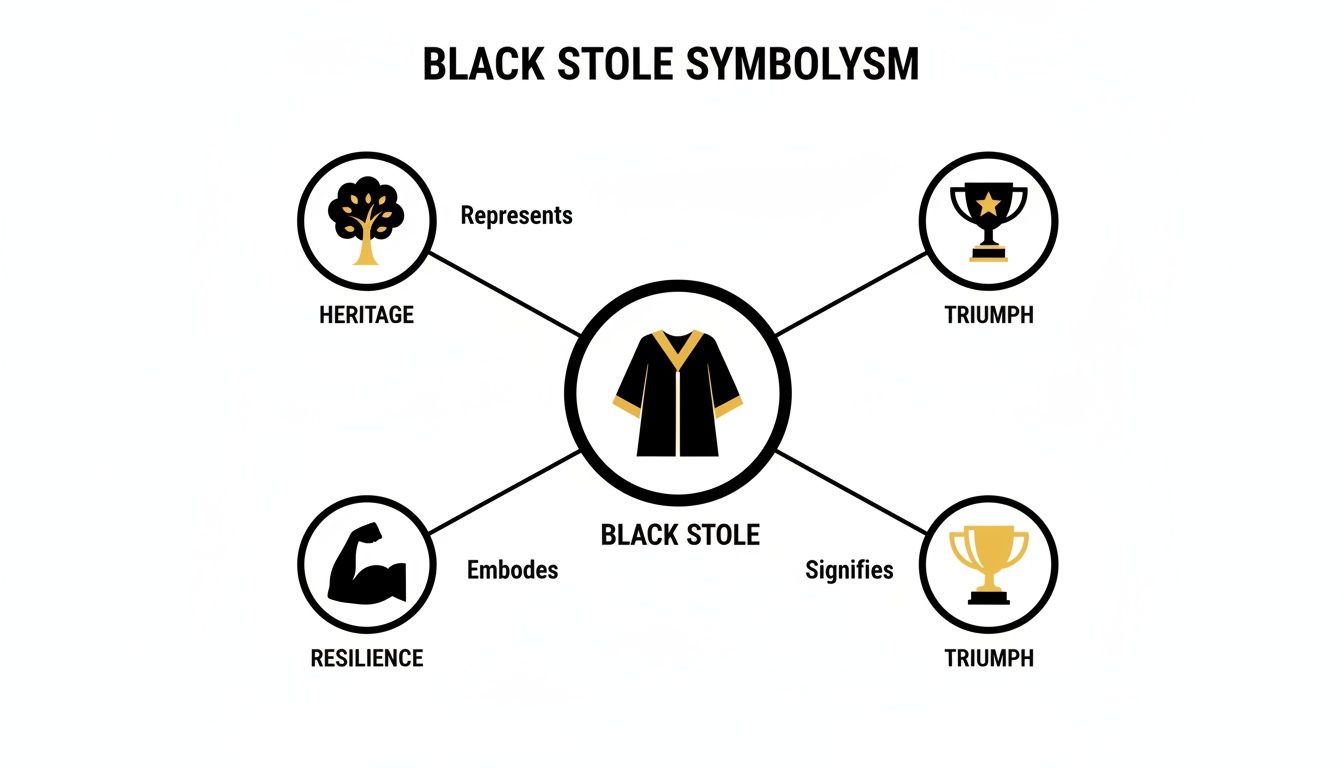
This really shows how the simple act of wearing a stole becomes a powerful statement that captures your entire journey as a graduate.
To help you better understand the story woven into your stole, here's a quick look at the meanings behind the most common Kente colors.
A Quick Guide to Kente Cloth Colors
Understand the traditional meanings behind the vibrant colors woven into your Kente graduation stole.
| Color | Symbolic Meaning | Represents |
|---|---|---|
| Gold | Royalty & Wealth | Prosperity, high status, glory |
| Yellow | Preciousness | Beauty, royalty, spiritual purity |
| Green | Growth & Renewal | Newness, vegetation, spiritual growth |
| Blue | Peace & Harmony | Love, humility, patience |
| Red | Passion & Sacrifice | Political turmoil, bloodshed, spiritual rites |
| Black | Maturity & Ancestors | Spiritual energy, passing rites, heritage |
Seeing the colors laid out like this makes it clear just how much thought goes into every single stole.
Modern Expressions of Pride
While traditional Kente cloth is a timeless choice, the tradition of using black graduation stoles to make a statement has grown. Today, graduates use their stoles to voice contemporary messages of empowerment and identity. They're connecting their academic success directly to current social movements and their own personal beliefs.
For example, you'll often see stoles featuring the Pan-African colors—red, black, and green—worn to express solidarity and a connection to the broader African diaspora. You might also see powerful messages like "Black Grads Matter" or "Black Excellence" beautifully embroidered on the fabric.
These modern designs turn the stole from a purely historical symbol into a living, breathing declaration of present-day pride and future aspirations.
The real beauty of these stoles is their ability to be both deeply personal and universally understood. Whether through ancient patterns or modern text, a graduation stole becomes a canvas for the graduate’s unique story.
To fully appreciate the artistry, especially with traditional textiles like Kente, it helps to understand the skill behind various types of woven fabrics and luxury textiles. This context really highlights the incredible craftsmanship that goes into creating these meaningful pieces of graduation regalia.
How to Style Your Graduation Stole
Think of your graduation stole as the finishing touch on your academic regalia—like the perfect tie on a suit. It’s the final piece that pulls everything together, making sure your achievements and heritage get the spotlight they deserve. Wearing it right gives you a polished, dignified look for your big day.
The idea is simple: drape the stole evenly over your shoulders so it lays flat against your gown. You're aiming for a balanced, symmetrical look that honors what the stole represents.

Achieving the Perfect Drape
Getting your stole to sit just right is pretty easy once you know the trick. A well-placed stole looks neat and respectful, and it saves you from making awkward adjustments as you walk across the stage.
Just follow these simple steps for a flawless fit:
- Find the Center: Hold the stole up and find the middle seam at the back.
- Position on Your Neck: Place that midpoint right on the back of your neck, just like you’d put on a scarf.
- Drape Evenly: Let both ends hang down your front. Nudge them a bit until both sides are the exact same length.
- Smooth It Out: Make sure the stole is lying flat against your chest and shoulders, with no weird twists or bunches. It should follow the lines of your gown.
This simple method ensures all your custom details—whether it's embroidery or a Kente pattern—are displayed clearly and proudly. For a more detailed walkthrough, check out our complete guide on how to wear your graduation stole and sash.
Layering with Other Regalia
Plenty of graduates wear more than just a stole. You might also have honor cords, academic medals, or hoods for advanced degrees. The key is layering these pieces elegantly so you don't look cluttered and every honor gets its moment.
When you're adding other items, the order really matters.
The rule of thumb is to layer from the inside out. Your stole should be one of the outermost layers, placed right over your gown. Any honor cords you have should be draped on top of the stole. This creates a clean backdrop for your cords to pop.
If you have more than one honor cord, group them together first before placing them around your neck. Here’s a little pro tip: a small safety pin, hidden at the back of your neck, can secure the cords and stole to your gown. This keeps everything from shifting around during the ceremony and helps you look composed all day.
By carefully styling your black graduation stoles and other regalia, you create a look that’s not just respectful, but also a powerful reflection of your entire academic journey.
Making a Stole That’s Uniquely Yours
Your road to graduation was one-of-a-kind, and your stole should be too. When you personalize a black graduation stole, you're turning it into something more—a real testament to your own story, your wins, and who you are. This is all about capturing the heart of your college experience and wearing it proudly.
Customizing your stole means you don’t have to settle for a generic design. It's your chance to give a nod to the clubs, heritage, and academic paths that really made your time at school special.

Embroidery and Text Options
Embroidery is hands-down the most popular way to add that personal touch to black graduation stoles. The raised, textured look gives the fabric a premium feel that really pops against a graduation gown.
What do people usually add?
- Your Name: Simple, classic, and a powerful way to own your achievement.
- Graduation Year: Lock in the memory of when you walked the stage (e.g., "Class of 2024").
- Degree or Major: Show off your field of study with pride, whether it's "B.S. in Engineering" or "Juris Doctor."
- A Meaningful Quote: A short phrase or motto that kept you going through those late-night study sessions.
These small details take your stole from a standard piece of regalia to a personal keepsake you'll treasure. If you're feeling extra creative and want to add some truly custom patterns, learning how to digitize embroidery designs can open up a whole new world of design possibilities.
Adding Symbols of Identity and Affiliation
Beyond just words, symbols and logos pack a powerful visual punch. They instantly tell the story of the communities you were a part of during your time as a student.
Take a moment to think about what really shaped your experience. Was it a cultural group? Your fraternity or sorority? Or maybe your national heritage? You can represent all of it right on your stole.
Your stole becomes a canvas for your entire identity. It’s not just about what you learned in the classroom; it’s about celebrating the heritage, friendships, and commitments that made you who you are today.
Here are some popular symbolic additions:
- Greek Letters: Perfect for representing your fraternity or sorority, which for many is the cornerstone of college life.
- National Flags: A fantastic way to honor your country of origin or cultural background. This is why our collection of custom flag graduation stoles is so popular among diverse student bodies.
- Organization Logos: Display the emblem of a club, sports team, or student government group that meant the world to you.
This desire for personalization isn't just a trend; it's a real market. Kente stoles and other culturally-themed graduation gear carry deep meaning and also represent a market valued in the low millions of dollars, especially around graduation season. The fact that graduates are willing to pay more for custom details like an embroidered name or logo shows just how important this kind of personal expression is. You can see the incredible variety and cultural significance of these meaningful Kente stoles on graduationattire.com.
What to Do If Your School Has Rules Against Cultural Regalia
Wearing a cultural stole is a defining moment, a proud declaration of your journey and heritage. But sometimes, that powerful statement can get tangled up in institutional red tape. It can be frustrating, but knowing how to navigate your school’s regulations is the key. With the right approach, you can advocate for your right to celebrate who you are.
The first move is always to check the official school guidelines. Dig up the student handbook or the specific commencement guide your university publishes. You're looking for sections on "regalia," "attire," or "adornments." See if cultural items, like a black graduation stole, are mentioned at all.
Proactive Steps for Students
If the handbook is vague or seems to shut the door on cultural stoles, your work isn't done. In fact, it's just getting started. Many universities have entire offices set up to help students from diverse backgrounds.
- Connect with the Diversity and Inclusion Office: This office is your natural first stop and likely your strongest ally. The staff here are paid to support students like you and can help clarify the rules or even go to bat for you with the commencement committee.
- Talk to Student Government: Your student government association (SGA) can be a surprisingly powerful voice. It’s possible they've already tackled this issue, but if not, they can bring it to the administration’s attention with the weight of the student body behind them.
- Organize with Student Groups: Get in touch with the Black Student Union or other cultural organizations on campus. There's strength in numbers. A unified request from a large group shows this isn't just one person's wish—it’s a collective desire to honor deeply held traditions.
This isn't just about getting permission for one ceremony. It's an opportunity to create a more inclusive campus for every graduate who comes after you. Your voice can help make the acceptance of cultural regalia an official, lasting policy.
Unfortunately, this isn't a new issue. Clashes over policies, particularly involving black graduation stoles, have been making headlines for years. Since the 2010s, there have been documented cases of school districts applying one set of rules for Kente and other cultural stoles, and another for different types of regalia. These incidents have sparked community protests and, often, have led to real changes in district guidelines. It's proof that when students and communities speak up, the administration listens.
You can learn more about how these policy debates have played out at abc11.com. By being informed and prepared, you and your family can confidently navigate this process and make sure your graduation day truly reflects everything you've accomplished and everywhere you come from.
Got Questions About Graduation Stoles? We Have Answers.
As graduation gets closer, a few questions about your regalia are bound to pop up. It's totally normal. Trying to figure out the traditions and practical details of something like a black graduation stole can feel a bit confusing, but getting it right means you can focus on the real prize—celebrating everything you’ve accomplished.
This final section cuts through the noise and tackles the most common questions we hear from graduates. Let’s get you feeling confident and ready for the big day.
Can Anyone Wear a Kente Stole?
Yes, absolutely. While the Kente stole has deep roots in Ghanaian culture and is a powerful symbol for the African diaspora, its core message of triumph and pride is universal. Anyone who wants to honor African heritage and celebrate the incredible achievements of the Black community is welcome to wear one.
In fact, it’s common for allies to wear Kente stoles as a sign of solidarity and respect for their peers' journey. The most important thing is to wear it with a genuine appreciation for its cultural weight and what it stands for. While some groups might have their own exclusive stoles, the Kente stole is widely seen as an inclusive and unifying symbol of achievement for anyone who connects with its meaning.
How Should I Care for My Graduation Stole?
You’ll want your stole looking sharp for photos, and maybe even preserve it as a keepsake for years to come. Proper care is key, and it all comes down to the material.
For most satin stoles (a popular choice for custom designs):
- Iron on a low heat setting. High heat is the enemy and can easily scorch or melt the fabric.
- Always use a buffer. Place a thin towel or pillowcase between the iron and the stole to protect it.
- If you have embroidery, flip the stole over and iron on the reverse side. This keeps the threadwork from getting damaged.
If you have an authentic, hand-woven Kente cloth, it’s best to skip the iron entirely. The beautiful, intricate weaving is delicate. Just hang it up for a few days before the ceremony, and any creases from shipping should fall out on their own.
Once graduation is over, store your stole by either laying it flat in a keepsake box or hanging it up in a garment bag. This will keep it free from dust and wrinkles, preserving the memory of your big day.
What’s the Difference Between a Stole and a Sash?
You'll hear people use "stole" and "sash" like they’re the same thing, but in the world of academic regalia, they are two very different items. Knowing the lingo ensures you order the right accessory.
A stole is what you’re looking for. It's the long, scarf-like garment worn over your shoulders that drapes down the front of your graduation gown. This is the standard for Kente cloths, honor stoles, and just about any other cultural or academic regalia.
A sash is something else entirely—it's a band of fabric worn diagonally across the chest, from one shoulder to the opposite hip. You see sashes all the time in pageants or for homecoming courts. For your commencement ceremony, a stole is almost always the correct term.
Where Can I Buy a Black Graduation Stole?
You’ve got a few great options, depending on exactly what you’re after. For authentic, hand-woven Kente stoles, your best bet is to find vendors who source their products directly from artisans in Ghana. You can often find them on specialized cultural retail sites or marketplaces for handmade goods.
If you’re leaning toward a stole with custom embroidery—like your name, major, or fraternity letters—reputable graduation supply companies are the way to go. Your university bookstore or specific student organizations also tend to coordinate bulk orders for their members, which can be a super convenient option.
Here’s a pro-tip: to avoid any last-minute panic, order your stole at least 4-6 weeks before your graduation date. This buffer gives you plenty of time for customization, shipping, and sorting out any unexpected delays. A little planning now means your stole will be perfect and ready for your celebration.
At Stoles.com®, we’re all about creating high-quality, customizable graduation stoles that tell your unique story. Whether you want to represent your heritage with a flag stole or celebrate your academic wins with a custom honor stole, we have the perfect option to make your graduation day one you’ll never forget. Explore our full collection and design your own stole at Stoles.com today.